


Developmental Medicine at Riley Children’s Health offers specialized care for kids with developmental and genetic conditions and behavioral concerns from infancy through the transition to adulthood. This could include developmental delays, autism spectrum disorder, behavioral conditions, cerebral palsy, spina bifida, Down syndrome, intellectual developmental disorder and many genetic conditions.
Children with developmental conditions may learn and experience the world in unique ways. They could have physical challenges that are different from other children, or they may have learning and behavioral concerns that need special attention.
The Developmental Medicine team at Riley Children's offers expert services and support for your child and family. We care for infants, toddlers, children and adolescents and address immediate needs through inpatient care at the hospital. We also offer consultation, testing and support through our outpatient programs.
What to Expect with Developmental Medicine
What to Expect with Developmental Medicine
Riley Developmental Medicine offers support and services to meet your child’s needs. This includes:
- Medical evaluation and care management recommendations
- Psychology testing and consultation
- Behavioral therapy for young children
- Feeding and growth evaluation
- Genetic testing and counseling
- Support to help children ages 12-22 transition to adult healthcare
Medical Evaluation & Management
When you meet with Riley Developmental Medicine team members, we do a full medical evaluation for your child. This includes reviewing your child’s past medical and developmental history and any prior imaging or scans.
After the evaluation, your child’s care team at Riley may recommend:
- Therapies and behavioral support
- Educational support
- Nutrition and dietary support
- Medications or other medical treatments
- Psychological testing
- Lab work
- Genetic testing
- Imaging
Riley Developmental Medicine also follows up with your child’s primary care provider so that we’re all on the same page when treating your child. Together, we can offer you a home base for your child’s complex medical needs. We manage and monitor your child’s changing needs so we can offer the right support at the right time. This may include managing feeding or medication and building ongoing care plans up through age 22.
Psychology Consultation & Testing
Our team offers psychological evaluations to understand how your child is developing and to determine whether they may have a developmental condition. There may be a lengthy wait to get a psychological evaluation. While you are waiting for an appointment , you can access several services to support your child’s development.
- Virtual consultation: Brief appointment to gather information and identify next steps for your child, potentially including school-based interventions, outpatient therapies, or assessment.
- Virtual assessment: Younger children who speak very little may have a virtual assessment. The psychologist will interview caregivers and observe different interactions with your child.
- In-person assessment: Depending on the concerns you have about your child’s development, the team may recommend an in-person assessment. This appointment can last from one to five hours , depending on your child’s age and needs. These assessments typically evaluate your child for autism, but they can also identify other conditions, such as intellectual development disorder , global developmental delay, attention-deficit/hyperactivity disorder (ADHD), and anxiety.
- Interdisciplinary assessment: Sometimes, several different types of specialists will evaluate your child in one day. In an interdisciplinary assessment, your child may meet with speech and language pathologists, psychologists, developmental pediatricians and social workers. These appointments often take all day (up to seven hours) because providers work together to evaluate your child and provide recommendations to support them.
- Social work consultation: After an evaluation, many caregivers find it helpful to talk about resources. Our social work team can help you connect with the next steps to support your child’s development.
Behavioral Therapy for Young Children
Your provider may recommend behavioral therapy for your child. This kind of therapy helps to increase positive behaviors and reduce challenging ones. We offer three kinds of behavioral therapy, which are typically provided virtually:
- Short-term behavior treatment is available for parents of children six years or younger with behavior concerns. This includes up to eight sessions to review general behavior strategies that can be used with your child. These sessions may also offer more targeted treatments that address specific concerns, such as toilet-training, biting, sleep concerns or picky eating.
- Parent-Child Interaction Therapy (PCIT) is for children aged 2 – 7 with behavioral challenges. This therapy uses a coaching model, which means the therapist works with the parent and child together in sessions.
- Early Start Denver Model (ESDM) is intended for young children diagnosed with autism spectrum disorder or kids who show traits of autism. A certified ESDM therapist coaches parents in new ways to help you promote your child’s development.
Riley Feeding Evaluations
The Riley Feeding Program is a team of providers from different specialties who serve children and families experiencing feeding challenges. Our feeding team mainly treats children who are older than one year and who have difficulty eating, swallowing, using a feeding tube or maintaining a healthy weight. This can include children who feel anxious or selective (picky) when eating and children who gag and choke when eating (dysphagia).
You and your child will likely have more than one appointment to complete a consultation with our feeding team:
- An initial consultation with a developmental pediatrician and a registered dietitian. During this appointment, a doctor will physically examine your child and ask about your child’s medical, social and family history. The team will ask questions to get a detailed understanding of your child’s diet and feeding habits. You may receive a family-centered care plan and a resource binder at this first appointment.
- A follow-up consultation with a feeding therapist, often occupational and speech therapists. This team will review your child’s feeding and dietary history and observe your child at the table to understand how they eat. After this appointment, you may receive expert recommendations and a plan for ongoing feeding therapy.
- Consultation sessions with child psychology, social work and nursing. These appointments will be scheduled as needed.
Genetic Counseling Services
Some developmental disorders are genetic, meaning they were caused by changes in your child’s DNA. Riley Developmental Medicine offers both genetic testing and genetic counseling to identify these causes. We help you understand the results and connect you with support services.
- Genetic testing. We offer complete genetic testing that can typically be completed at home with a cheek swab. Our team can order two kinds of genetic tests: “whole exome” and “whole genome sequencing.” These tests quickly scan your child’s DNA to find the cause of your child’s disorder. Your doctor will talk to you about your child’s history and whether it makes sense to have genetic testing. Sometimes, your child may need to repeat a test because genetic testing can produce negative or uncertain results or because a new test has been developed. We might discuss additional tests with you at a follow-up appointment.
- Genetic counseling. After genetic testing, we will review your child’s results and meet with you to interpret them in a way that is easy for you to understand. Our team can offer you supportive counseling to process the results and direct you to helpful resources.
Healthcare Transition Program
This team helps patients ages 12 to 22 shift from a healthcare system focused on kids to one for adults. This visit takes a couple of hours and will include visits with a nurse, social worker and doctor. Together, we will develop a transition plan and share it with you and your doctors. The team can help you plan for adult insurance when your child needs it, prepare for life after high school and show how family, friends, and community programs can support you and your child.
Conditions & Services
Conditions Treated
Our pediatric specialists provide patient- and family-centered care for most related conditions. The links below provide more specific information about some, but not all, of the conditions that we treat.
Services Offered
We offer a number of different Developmental Medicine services. Below are some, but not all, of the services that we provide. If you have a question about a specific service that is not listed here, please contact our department.
Doctors and Locations
Doctors
Locations
Locations
In addition to our primary hospital location at the Academic Health Center in Indianapolis, IN, we have convenient locations to better serve our communities throughout the state.
Sort through 4 facilities offering Developmental Medicine care by entering your city or zip below.
Department Forms & Resources
Department Forms & Resources
The Riley Developmental Medicine provides the following forms for parents, healthcare providers and personnel.
Forms
-
Consultation Request Form (Riley Children's Health)
Referring providers should fill out this form and fax it to our dedicated referral fax line at 317.944.9760.
Resources
-
Learn more about how genetic testing for neurodevelopmental disorders (NDDS) can be beneficial.
Related Programs & Departments
Related Programs & Departments
We provide multispecialty care for a number of conditions. Below are links to our related programs & departments.
- Pediatric Audiology & Speech Pathology
- Child Psychiatry & Behavioral Sciences
- Cleft & Craniofacial Anomalies Program
- Down Syndrome Program
- Feeding Program
- International Adoption Program
- Medical & Molecular Genetics
- Pediatric Neurology
- Pediatric Cerebral Palsy Program
- Physical Therapy & Occupational Therapy
- Spina Bifida Program
Related Stories
Related Stories

Understanding and addressing self-harm in kids
Self-harm can be a sign that a child or teen is struggling to cope with difficult emotions. Learn why self-harm happens, what warning signs to watch for and how parents can help their child find healthier ways to manage distress.
Continue reading
“It’s important to do what you can for children”
Women’s History Month: Trailblazer pediatrician has saved countless lives while caring for kids and advocating for safe transportation in car seats.
Continue reading
Health Professionals
For Health Professionals
Refer A Patient
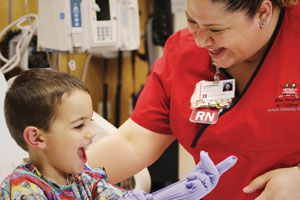
The Riley Developmental Medicine team works closely with referring providers to ensure that children receive the right care at the right time. We advise the referring provider of the patient's progress with each visit and the overall plan and treatment goals.
Refer A PatientResearch
Riley Developmental Medicine is doing research to improve care for children with neurodevelopmental and behavioral conditions. Our team researches many aspects of child developmental health. These studies include looking for ways to improve the diagnosis and treatment of autism, screening for developmental delays in young children and promoting healthy social and emotional development. Families will have the opportunity to enroll in a research registry to participate in studies that relate to each child’s condition.
Education
Riley Developmental Medicine provides graduate-level education for healthcare and education professionals, psychologists, speech therapists, social workers, family members and self-advocate learners. Learn more about our programs below.