A combination of rare heart defects, plus an issue with her esophagus, landed this little girl in the ICU, but she is a tiny fighter.
By Maureen Gilmer, Riley Children’s Health senior writer, mgilmer1@iuhealth.org
When Austin and Hailey Patterson learned their unborn daughter had two rare heart defects, they were naturally swept up in what ifs – what if she can’t breathe when she’s born, what if she requires major surgery, what if she can’t live a full life.
What they didn’t know then was just how strong their little girl was.
What they never doubted was all the love they had to give.
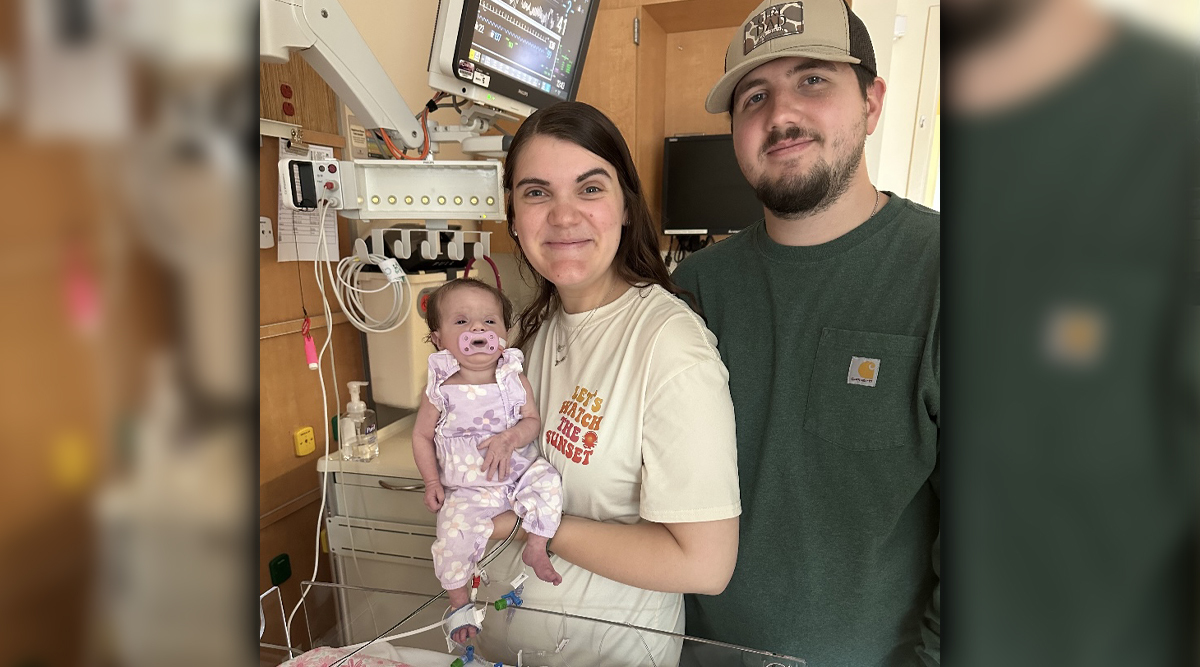
Bristol Patterson’s birth in May came with another surprise, another challenge. First, she was dealing with intrauterine growth restriction, so she had to be delivered at 37 weeks, weighing 4 pounds, 8 ounces.
Then, she was diagnosed with a tracheoesophageal fistula (TEF), an abnormal connection between the trachea and the esophagus, which required surgery to repair on Day 3 of life by Dr. Matthew Landman.
The combination of heart anomalies – unbalanced AV canal defect and truncus arteriosus – are rare and serious in themselves, but to have them together is something cardiologist Dr. Anne Farrell told the couple she’s never seen in her Riley career.
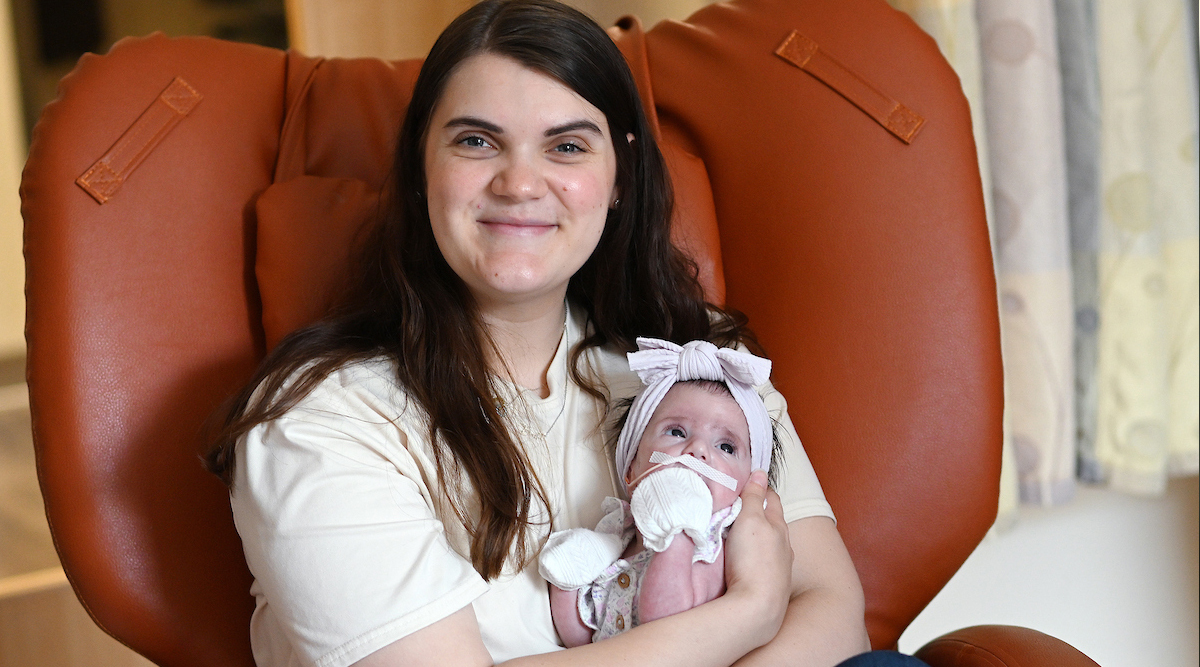
Bristol has been in the NICU at Riley Hospital for Children since she was born 11 weeks ago, as doctors monitor her esophagus, but other than for surgery, she has not had to be intubated, mostly able to breathe room air. She has a G-tube for nutrition, but her care team is working to get her more comfortable with bottle feedings.
Hailey Patterson spends most days by her daughter’s side, while Austin Patterson comes down from the couple’s northern Indiana home as often as he can. Hailey is a nurse and a former NICU nurse, so she knows more about her daughter’s care than the average parent. That’s both a blessing and a curse.
“I had no idea what to expect when she was born. I didn’t know too much about heart defects, but I thought she was going to need a lot more support. I thought she would be intubated. I thought it would be worse.”
Seeing how strong their little girl is gives Hailey and Austin the strength to advocate for her and learn all they need to know to give her the best care possible.
“I’m familiar with a lot, and I’ve learned a lot,” Hailey said as she snuggled with Bristol last week. “I do most of her care times and her baths. The heart stuff is unique, so we’re waiting while they figure out what approach to take.”
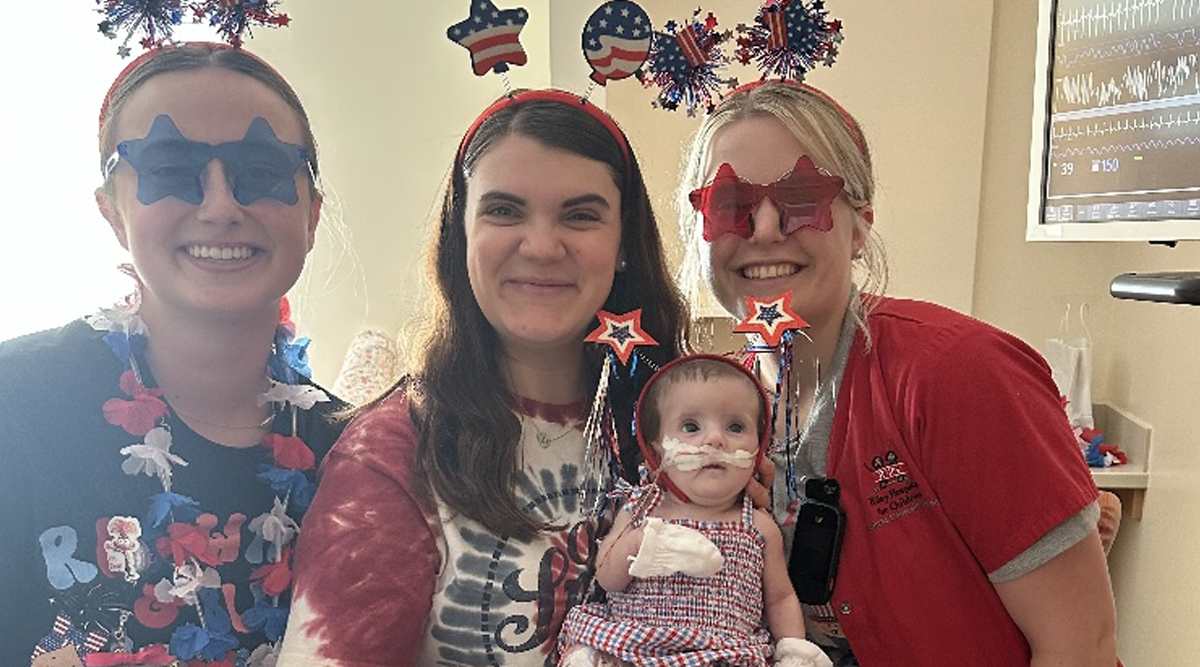
Meanwhile, Bristol is wrapped snugly in the love of her care team, particularly her primary nurses, Clara Schulz and Kelsie Walter, along with nurse Jennifer Stark.
“They have helped so much,” Hailey said of the NICU nursing team. “Just loving her and caring for her. It’s pretty great.”
Schulz turns the compliment back around to the family, saying, “They are so strong, and Bristol is such a fighter. I love taking care of her.”
While Bristol’s hospital stay has been complicated, Stark said the family has been “lovely and involved.” She believes their story will help inspire others, which is something Hailey Patterson also hopes to do.
“I wanted to share Bristol’s story because she is so much stronger than I thought she was going to be with two rare heart conditions.”
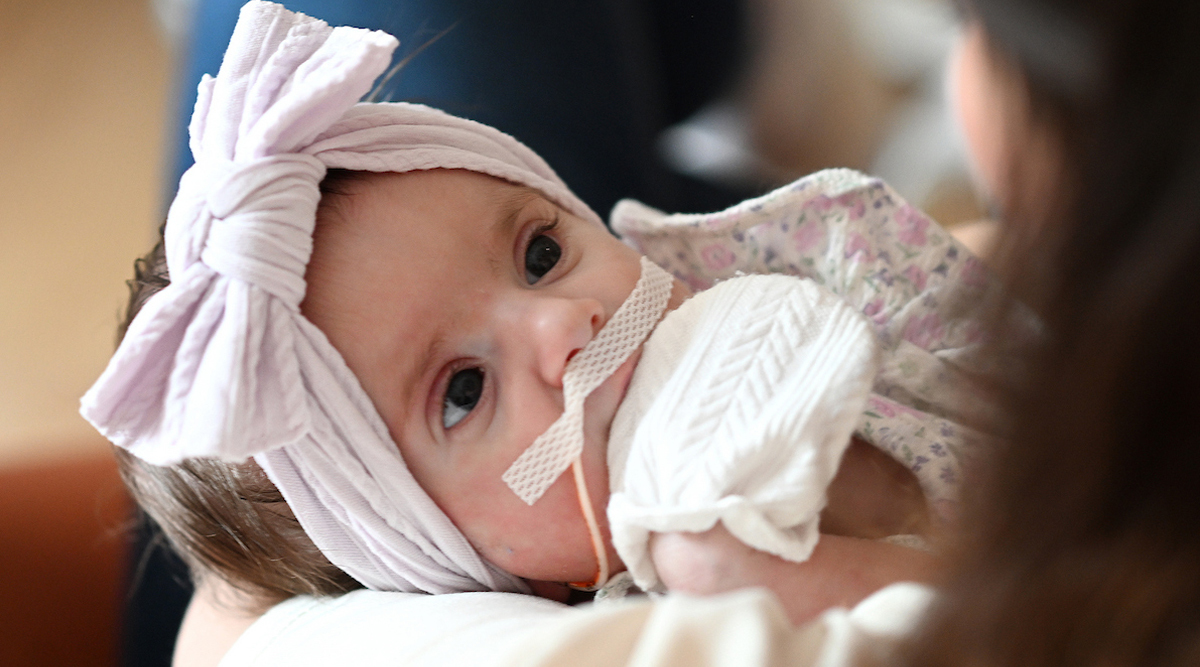
The unbalanced AV canal defect is a severe congenital heart condition where a single, shared valve opens into just one of the heart’s lower pumping chambers, forcing the other chamber to become too small (hypoplastic) to pump blood on its own.
Bristol’s other heart defect, truncus arteriosus, is another rare, congenital defect leaving her with a single large blood vessel leaving the heart instead of two – the aorta and the pulmonary artery.
The two conditions together represent an extremely rare and complex set of defects, requiring specialized surgical intervention.
Currently, Bristol has flow restrictors placed in her pulmonary artery to decrease the overflow of blood to her lungs so that she puts more blood into the rest of her body to grow. That intervention has enabled the medical team to postpone cardiac surgery until Bristol gets bigger.
In fact, she is doing so well now that her mom said she could be discharged home -- with the flow restrictors still in place -- as soon as next week. That in itself is extremely rare, but the specialized approach will allow her to grow safely before undergoing major open-heart surgery.
“Her ECHOs have looked beautiful these past few weeks,” Hailey said, adding that once home, Bristol will continue to have Riley providers’ eyes on her through the hospital’s advanced cardiac home monitoring program.
“To be honest, I never thought she’d be doing so well. She is one tough cookie.”
Photos submitted and by Mike Dickbernd, IU Health visual journalist, mdickbernd@iuhealth.org
Related Stories


Related Doctors