


Tiny farmer-in-training leaves Riley five months after his medically challenging birth.
By Maureen Gilmer, Riley Children’s Health senior writer, mgilmer1@iuhealth.org
After five months at Riley Hospital for Children, Colter Presnall has traded city life for life on the farm.
The preemie, who has Down syndrome, wore a perfect little onesie for his discharge from Riley last week, sporting the words: “Going home to take care of the farm.”
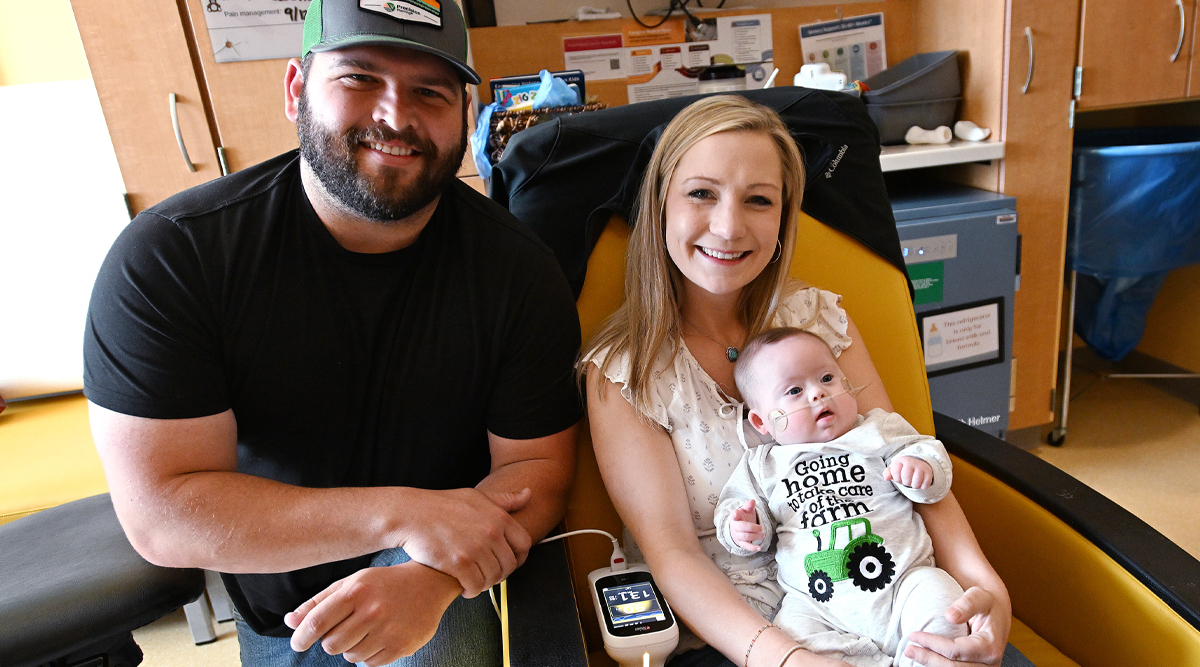
Colter, the son of Curt and Brooke Presnall of Fairmount, Indiana, has been the top dog on the eighth-floor Progressive Neonatal Intensive Care Unit since it opened in January.
Born Dec. 16 at the Riley Maternity Tower, he was just a few weeks old when he graduated from the NICU into the progressive NICU, where he worked on eating, breathing and growing.
In that time, he endeared himself to the team there, some of whom came in on their day off to say goodbye to the little boy who captured their hearts.
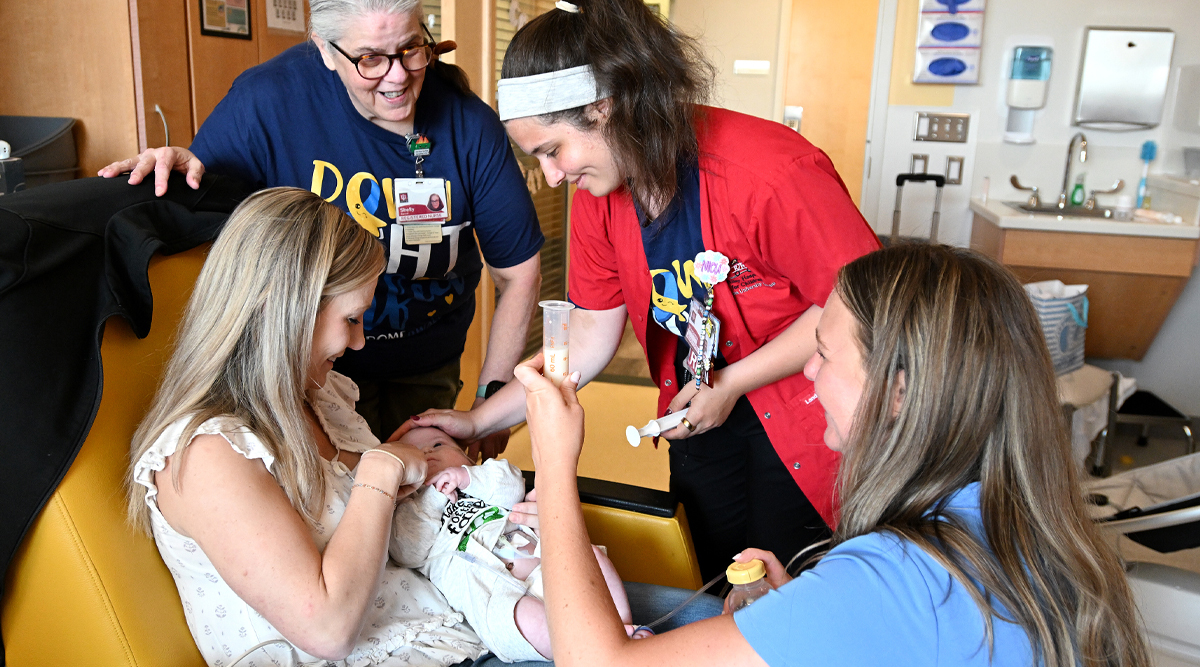
Vincenza Cascella (otherwise known as his “Aunty” Vinny), Cassie Barajas and Shelly Barrett, as well as nurse practitioner Molly Atha, were among those who came by to get one more hug from Colter and his parents before the young couple rolled him out in a Riley wagon to join his big sister Lainey at home.
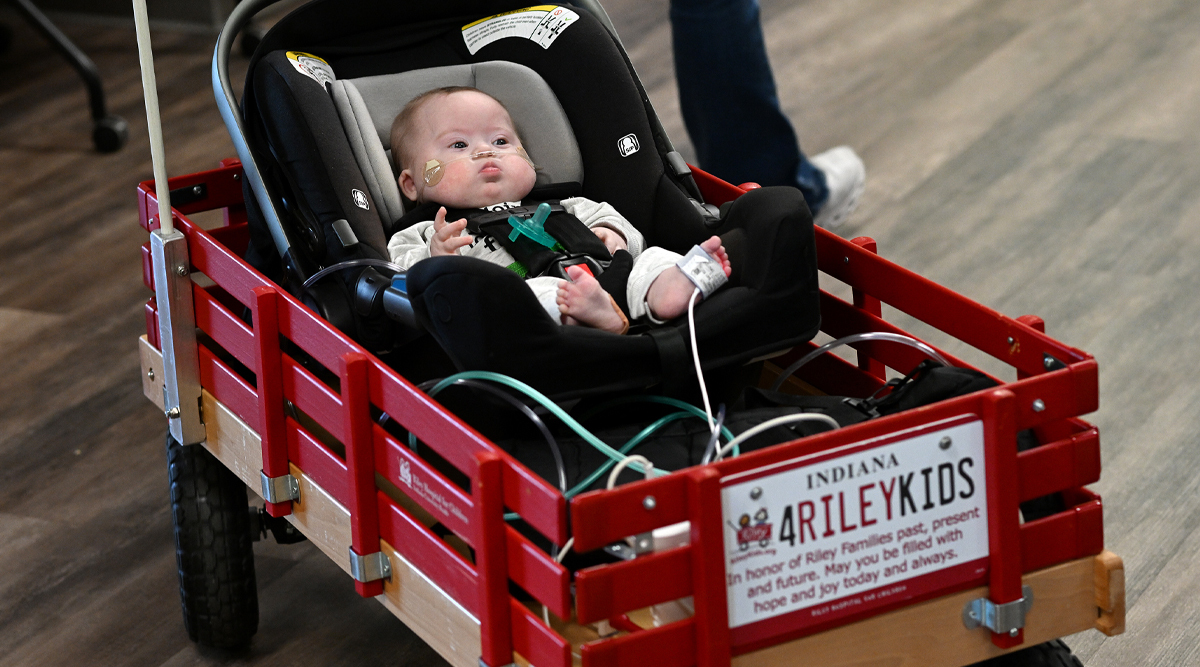
“We are so happy for him to go home, but we’re so sad because we just love him so much,” Cascella said.
Born at 31 weeks, Colter was diagnosed with fetal hydrops (a life-threatening condition where a fetus or newborn develops severe swelling and excessive fluid buildup that puts a strain on vital organs) at 28 weeks and underwent surgery in utero to place a shunt designed to drain the fluid.
When the procedure failed to correct the problem, Colter’s parents said they knew his chances of survival were not good.
“We cried a lot and prayed,” Brooke said as she cuddled Colter in her arms.
“We had a lot of faith and a lot of great people around us,” said her husband. “There were so many wonderful people here who gave us a lot of peace of mind.”
As doctors monitored Colter in the womb for signs of distress, they made the call at 31 weeks to deliver him via C-section, after which he had chest tubes inserted to drain the fluid from his little body.
“It was an honest miracle,” Curt said. “The fluid came off so fast, so there were no long-term issues.”
“He was very active in the last few weeks leading up to delivery, so I thought he was going to be strong enough to make it,” Brooke said.
Their faith saw them through, and the couple got the chance to hold their little guy for the first time on Christmas Day.
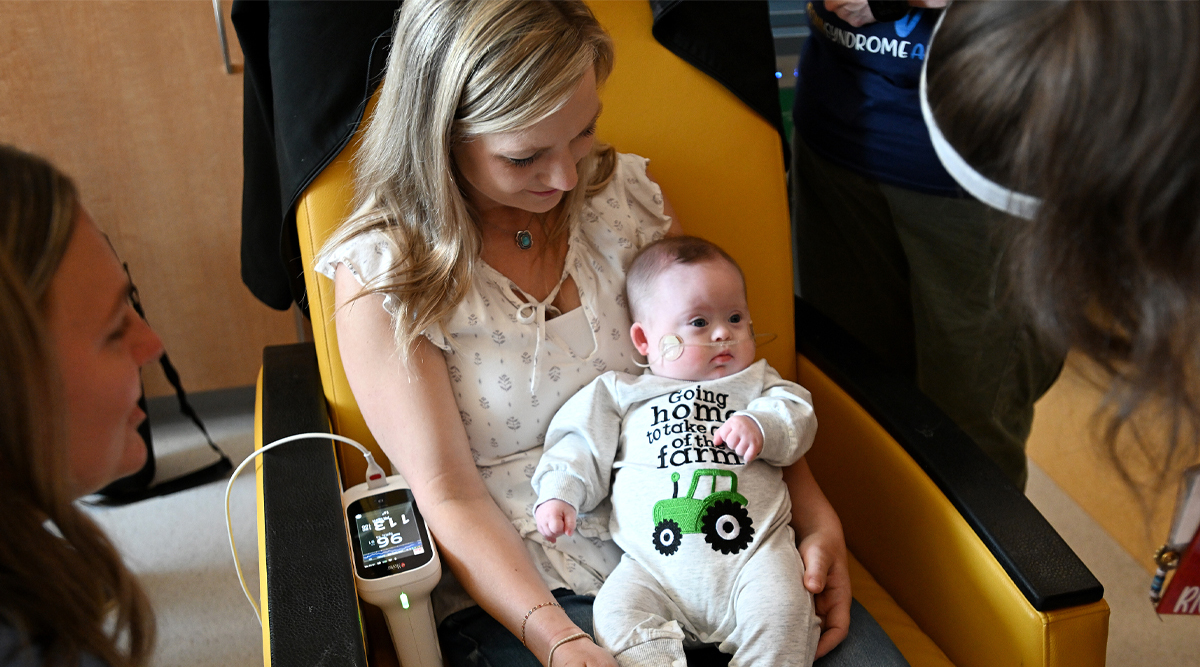
“It was a wonderful Christmas present,” Curt said.
“Early on, we had prepared ourselves for the chance that we were not going home with a baby,” Brooke said through tears.
“Now he’s thriving,” Curt added. “He’s already made a big impact on a lot of people. We know we are very lucky to be here. It was stressful, but we knew he was in the right place with the right people, so we took a lot of comfort in that.”
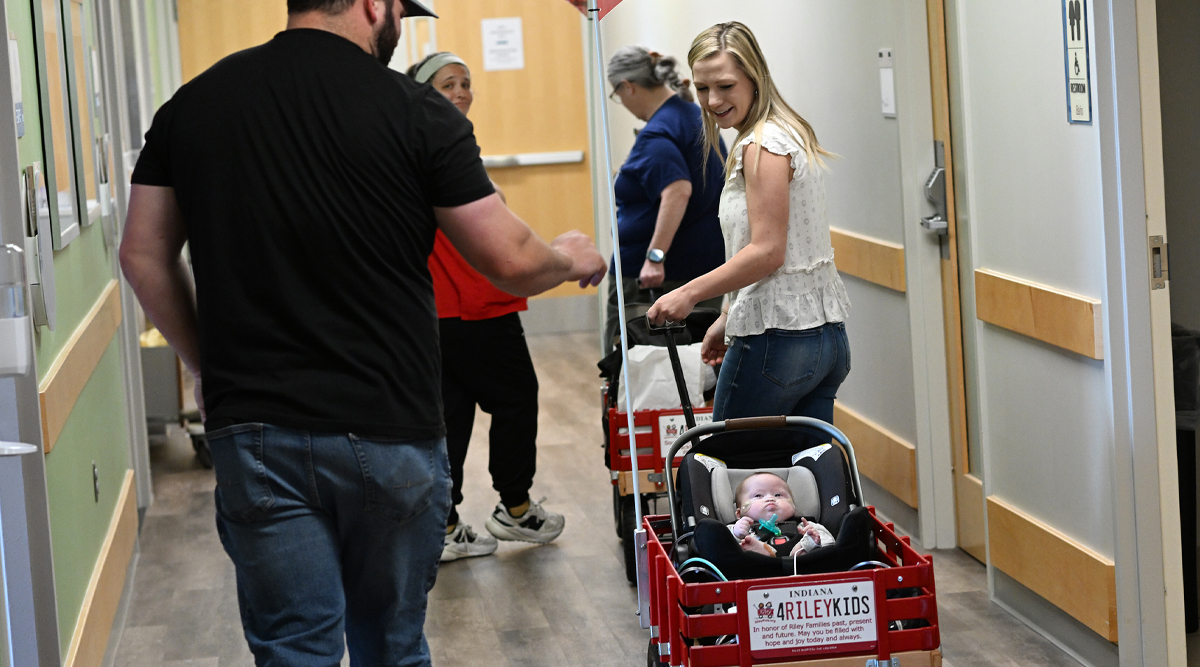
And last week, they got to take their son home for the first time.
“I see a lot of tractor rides in his future,” his proud dad said.
Photos by Mike Dickbernd, IU Health visual journalist, mdickbernd@iuhealth.org
Related Stories


Related Locations
