


A 12-year-old Greenwood girl is the first patient to undergo the gene therapy approved for thalassemia and sickle cell disease.
By Maureen Gilmer, Riley Children’s Health senior writer, mgilmer1@iuhealth.org
Monica Lewis couldn’t be happier that Riley Hospital for Children is in her backyard.
The Greenwood resident, who has four children with her husband, Nathan, is counting on Riley to help cure the blood disorder that has affected their daughter her entire life.
Riley is the site of a new gene therapy program, trialed for years in places like Children’s Hospital of Philadelphia (CHOP), that gives hope to families whose children are affected by non-malignant blood diseases that require regular blood transfusions just to live.
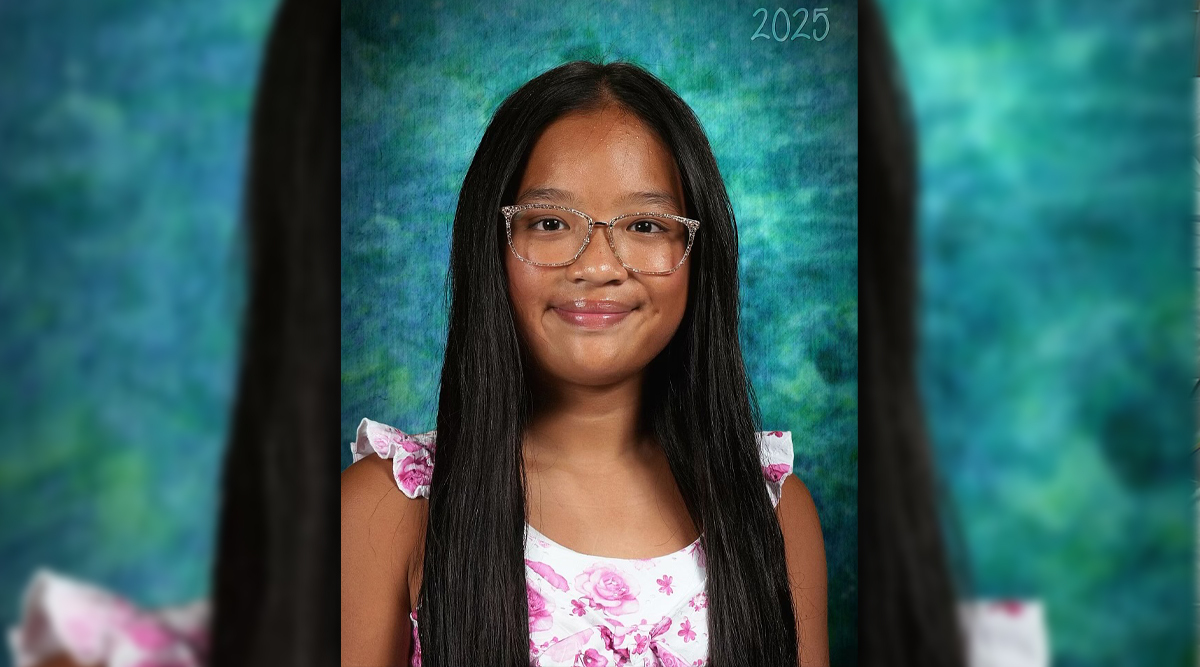
The couple’s daughter Elin, adopted from China nine years ago, has transfusion-dependent thalassemia (TDT), an inherited genetic condition where the body’s red blood cells don’t contain the necessary proteins to carry oxygen to all parts of the body. To treat this, patients typically must endure monthly blood transfusions to bring up their hemoglobin levels and keep their organs functioning.
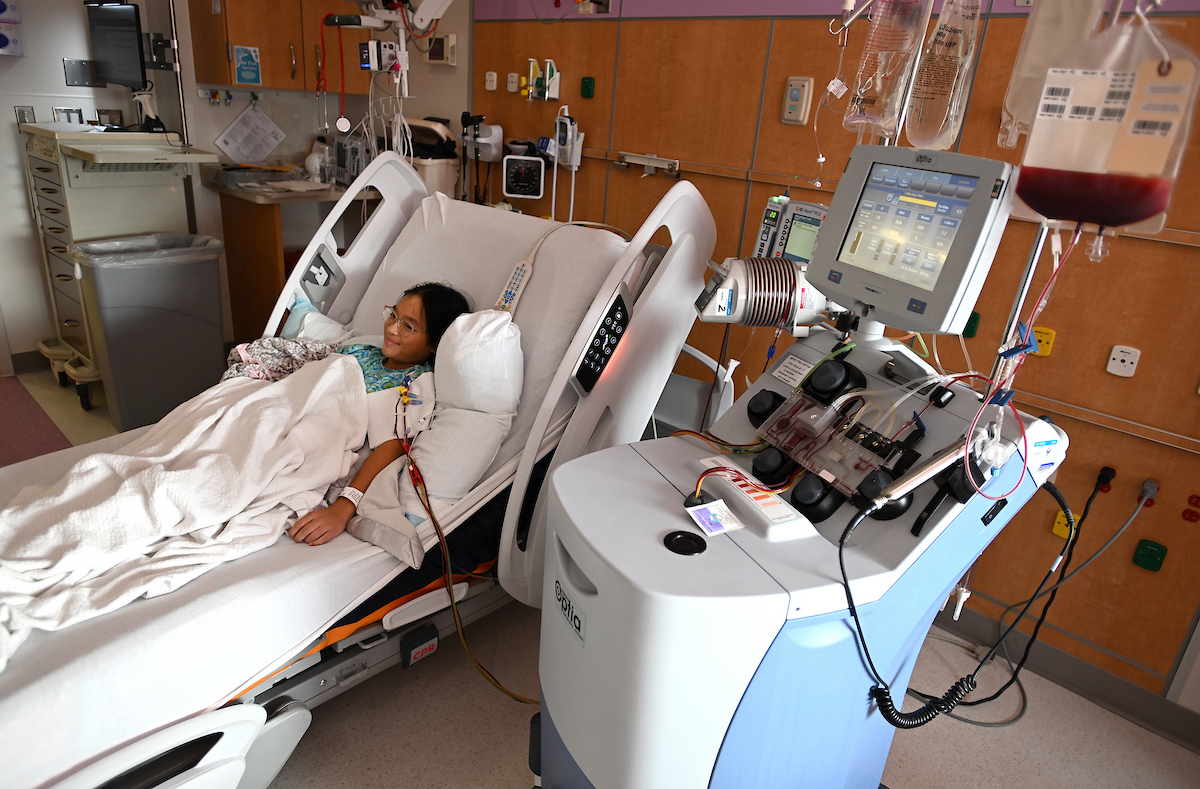
Elin, 12, is the first patient in Riley’s new red blood cell curative/transformative therapy, which involves collecting her own stem cells from her blood through a process called apheresis.
Those cells are genetically re-engineered offsite, then returned to Riley, where they will be transplanted back into her body. The therapy avoids the risks inherent in traditional stem cell transplant, including the difficulty of finding a good donor match, as well as graft vs. host disease and graft rejection.
“This is such a big step for Riley Hospital to be offering these next-generation therapies,” said Riley stem cell transplant physician Dr. Jonathan Bardahl, who did his fellowship training in stem cell transplant at CHOP before arriving at Riley last year.
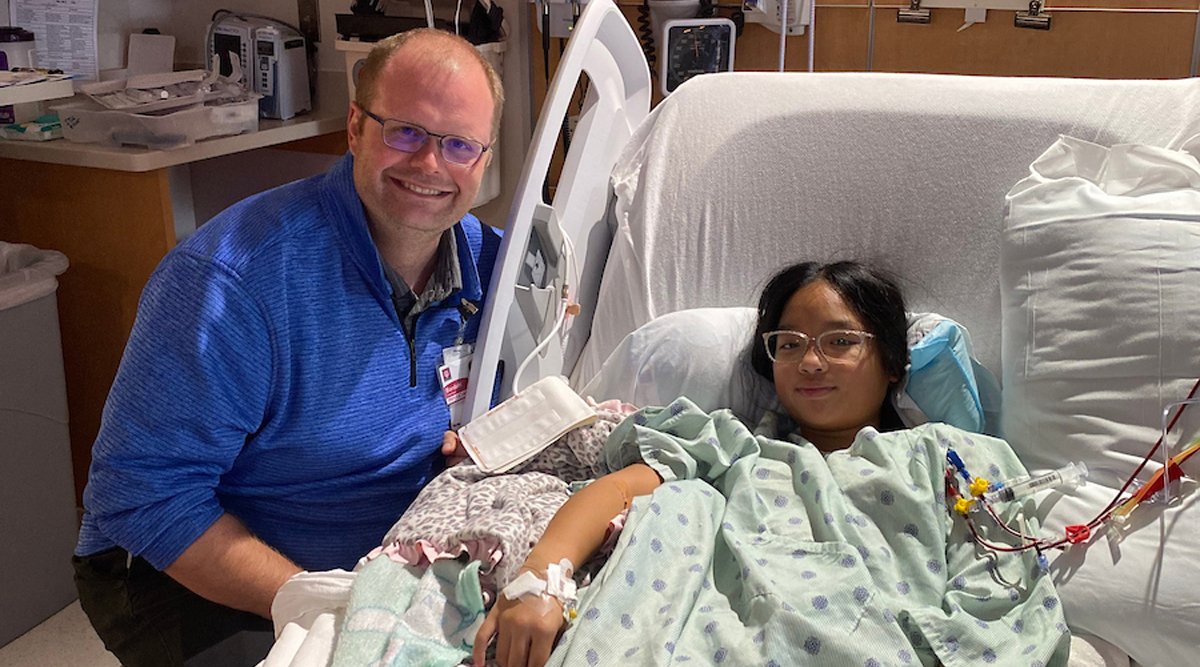
“When we’re thinking of curative therapy for these genetic conditions, traditionally it would be a bone marrow transplant, but what we know in patients with TDT and sickle cell disease is that the donor pool is smaller. With gene therapy allowing us to use their own stem cells, we can bypass that search for a donor.”
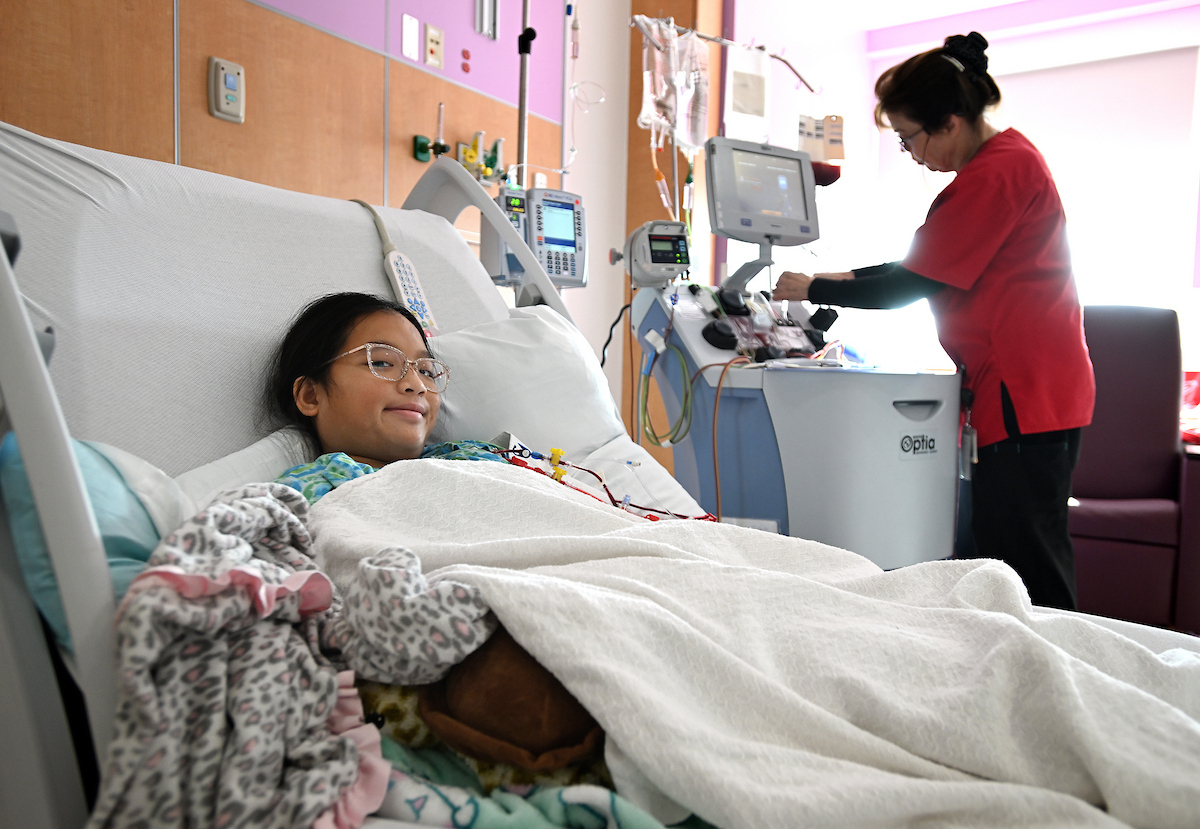
Elin underwent the initial part of the therapy last month at Riley, where a machine similar to a dialysis machine was hooked up to her via a central line for several hours over three days circulating her blood and collecting the stem cells.
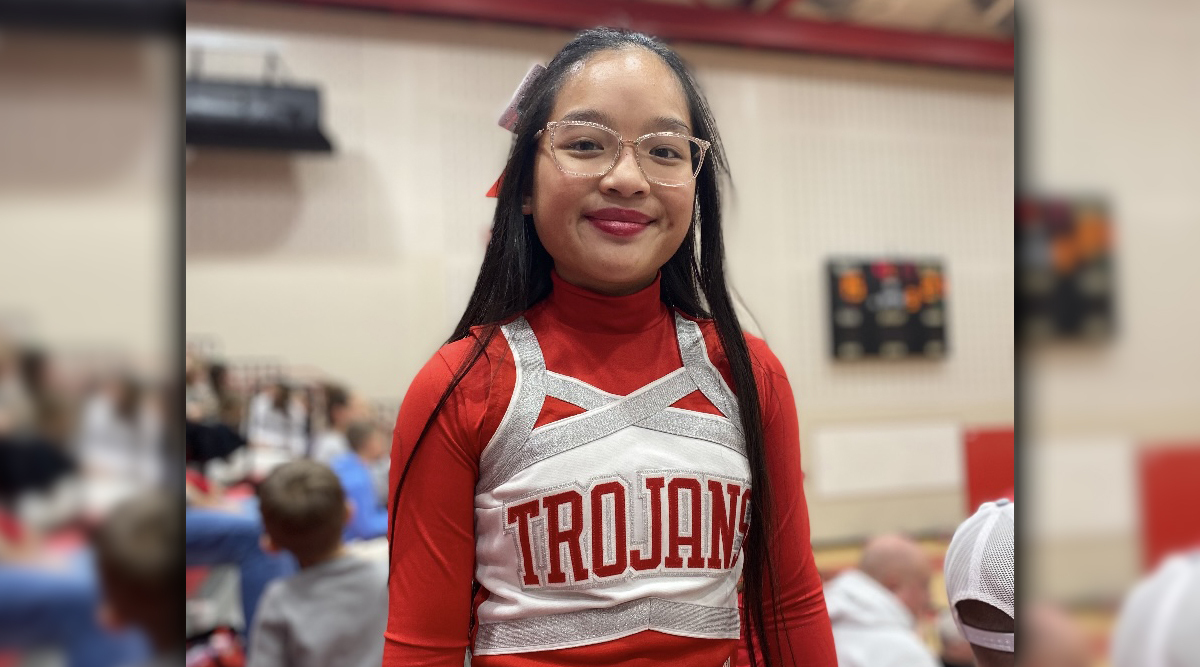
It doesn’t hurt, the Center Grove middle-schooler said as she watched TV and colored, but she was looking forward to being discharged and getting back to her many school activities, which include student council, cheerleading, Bible club and show choir.
In the first part of next year, once the modified cells are produced, Elin will return to Riley to complete the treatment. The modified stem cells will be infused back into her after a few doses of chemotherapy to prepare the bone marrow. She’ll likely be hospitalized for a month or more to ensure the transplanted cells are doing their job.
Dr. Seethal Jacob, director of Riley’s comprehensive sickle cell and related blood diseases program, has been seeing Elin for thalassemia since Elin was 3. Elin’s parents adopted her from an orphanage in China, where she had not been receiving regular blood transfusions. Since coming to Riley as a toddler, she has been receiving monthly transfusions, but now the hope is that she will no longer require them.
“I remember talking to Elin’s family years ago when these trials first started about how this might be a really great opportunity for treatment for thalassemia patients,” Dr. Jacob said.
Elin’s parents tried to get her into that CHOP trial many years ago, but her iron levels were too high at the time, Monica Lewis said.
“It didn’t work out then, and that’s OK because Dr. Bardahl was there (at CHOP) then, and now he’s here. It’s amazing!”
Lewis, who connected with a thalassemia support group online, felt compelled to share her family’s journey to give other people hope, she said.
“I feel like knowledge is power, and we would not be here today if we didn’t have people sharing their stories.”
The idea that their daughter can live a life free of monthly transfusions is a dream, but one they hope will come true.
“This will give us all more freedom,” she said. “We are happy to share this because we are happy this treatment option landed here at Riley.”
Dr. Jacob, who hosts a regular multidisciplinary clinic with Dr. Bardahl and other specialists for patients with thalassemia and sickle cell, is thrilled to see the program get off the ground.
“To see it get through the studies, get FDA approval and now get to the point where we can administer it through our own institution is just wonderful and a testament to all the work our Riley teams and collaborators have done to lift up sickle cell and thalassemia care here over the last 10 years that I’ve been here,” she said.
“Elin has been coming to clinic for chronic transfusions since she was 3, so it’s exciting to be thinking about a cure for her now.”
There are nearly 500 Riley patients with thalassemia or sickle cell disease, Dr. Jacob said, so having this type of curative or transformative therapy available to more patients positions Riley as a leader in this space in the state.
Her team is currently working to get insurance approval for a patient with sickle cell to receive the treatment. While gene therapy for thalassemia can be considered a cure, she said, for sickle cell, it’s more transformative, improving quality of life by diminishing the disease.
For now, all eyes are on Elin and how well she does as it gets closer to the day when she will have the modified stem cells infused back into her body to produce healthy red blood cells.
The data available for these types of therapies, especially for thalassemia, indicate that 90 to 95 percent of patients who complete the therapy no longer require transfusions, Dr. Bardahl said.
“They can have a life away from the burden of coming to the hospital every month.”
Photos submitted and by Mike Dickbernd, IU Health visual journalist, mdickbernd@iuhealth.org
Related Stories


Related Doctors

