


New AED law for schools will save lives, advocates say. Riley cardiologist Dr. Adam Kean calls the law a “watershed moment.”
By Maureen Gilmer, Riley Children’s Health senior writer, mgilmer1@iuhealth.org
Drew Strasser is living his best life today, three years after nearly losing his life during a high school tennis practice when he suffered sudden cardiac arrest.
He and his family are among those relieved to see a new state law go into effect the first of this month requiring all schools – public, private and charter – to have AEDs (automated external defibrillators) onsite not just in schools but at all school events, such as football games, band concerts, choir events, etc.
The legislation, originally put forth in 2023 as Jake’s Law in memory of Jake West, a high school football player who died in 2013 after suffering sudden cardiac arrest, was quietly revived this year and included in a broader education bill, thanks to advocacy by educators, medical professionals and parents.
“Julie West (Jake’s mom) really drove this bill home in honor of her son,” said Riley Children’s Health cardiologist Dr. Adam Kean, who has been a vigorous supporter of AEDs and AED training.
Drew and his mom, Laneia, along with West, were among those who testified at the Statehouse in support of the law this year.
For Dr. Kean, the law’s passage might have been quiet, but the impact will echo throughout the state.
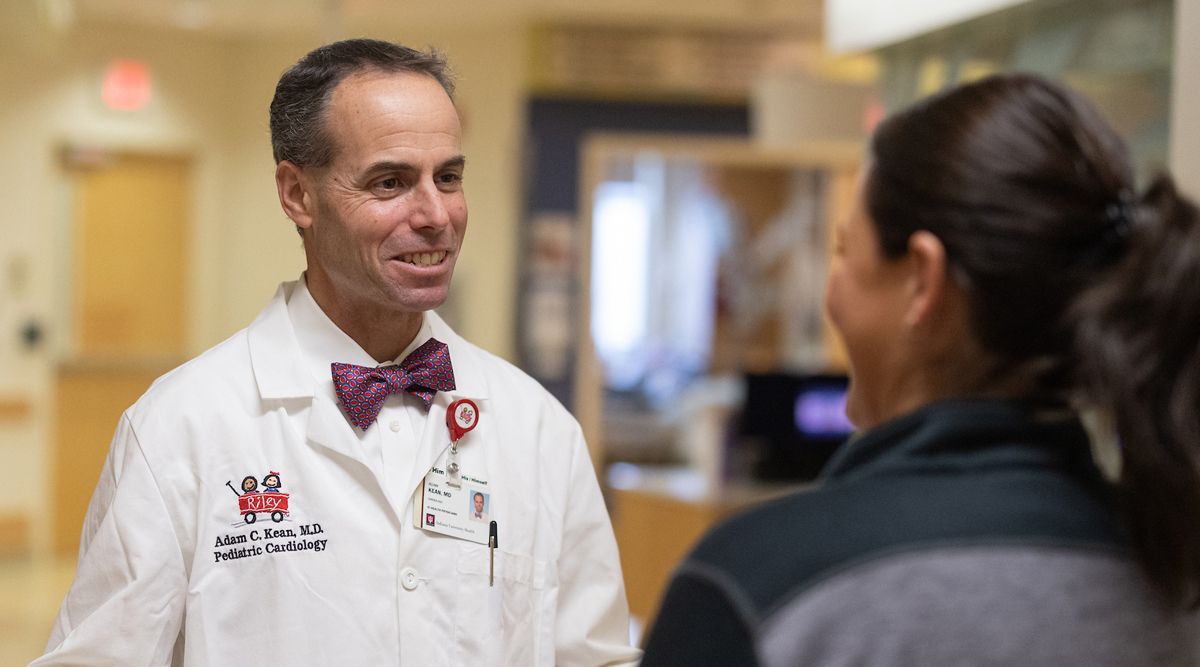
“This is a watershed moment for the state of Indiana,” said Dr. Kean, who specializes in heart rhythm disorders. “There are two aspects that get me most excited about this new law: It will have an immediate impact on saving lives, and it will educate children who are going to those schools. They are the next generation of adults who will be well-versed in basic life support and in using AEDs.”
As the largest children’s hospital in the state, Riley oversees Project ADAM Indiana, which aims to get all schools certified as Heart Safe Schools.
Project ADAM is named for a Wisconsin high school basketball player who collapsed on the court and died after suffering sudden cardiac arrest in the late 1990s.
Dr. Kean, medical director of Project ADAM Indiana, is deeply involved in helping schools become Heart Safe Schools, a designation that signifies a level of competence in responding to any incident of sudden cardiac arrest in a school setting or school-sanctioned event.
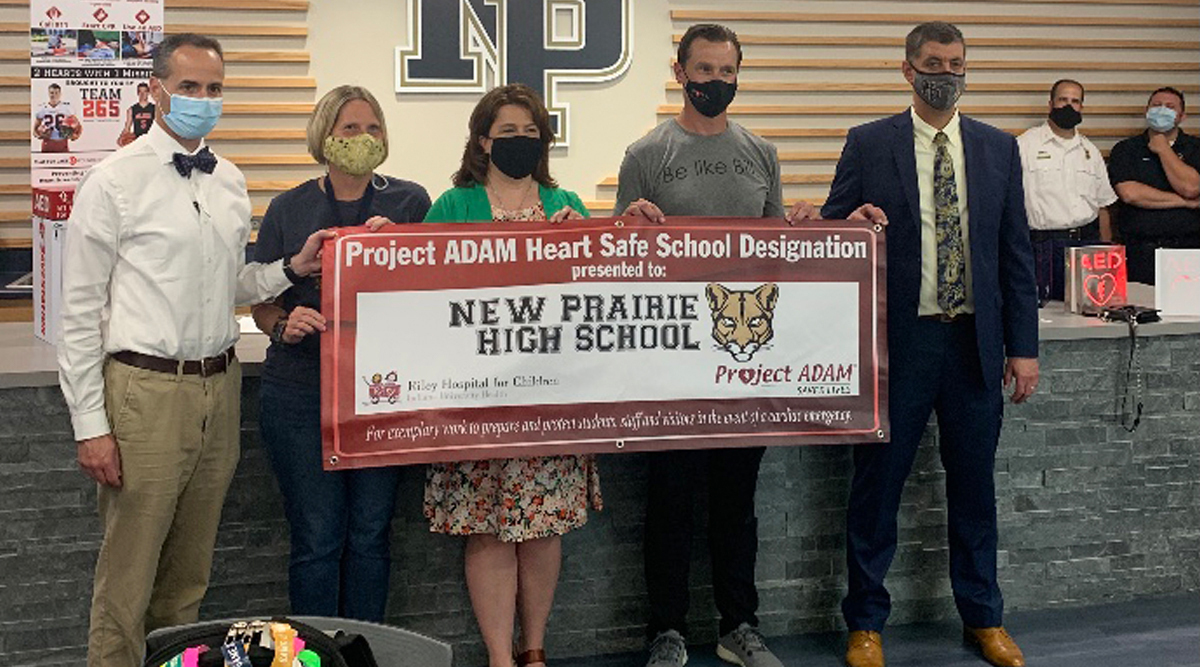
He and his small team, which includes Riley injury prevention coordinator Nick Hogan, and former teacher Tonya Aerts (who supports the program in northern Indiana) have worked with schools around the state to provide training and education around the use of AEDs.
It’s a passion project for Dr. Kean, who has treated many children for sudden cardiac arrest, including Drew, a previously healthy young athlete who was revived by an AED at his Rochester, Indiana, school in 2022.
In Drew’s case, and others like him, rapid response is critical to survival.
“We know that out-of-hospital cardiac arrests will usually – in greater than 90% of cases – result in cardiac death,” Dr. Kean said. “With the use of an AED within 3 minutes, the survival rate increases dramatically.”
Laneia Strasser remembers those terrifying moments when she first learned that her son had collapsed at school, then raced with her husband and daughters to a South Bend hospital where Drew had been taken.
He was transferred later that day to Riley, where Dr. Kean and the medical team treated him.
Had Drew not received prompt CPR and a shock from an AED by a trained school staff member, he would not have survived, Dr. Kean said.
“He would have died if that AED had not been there.”
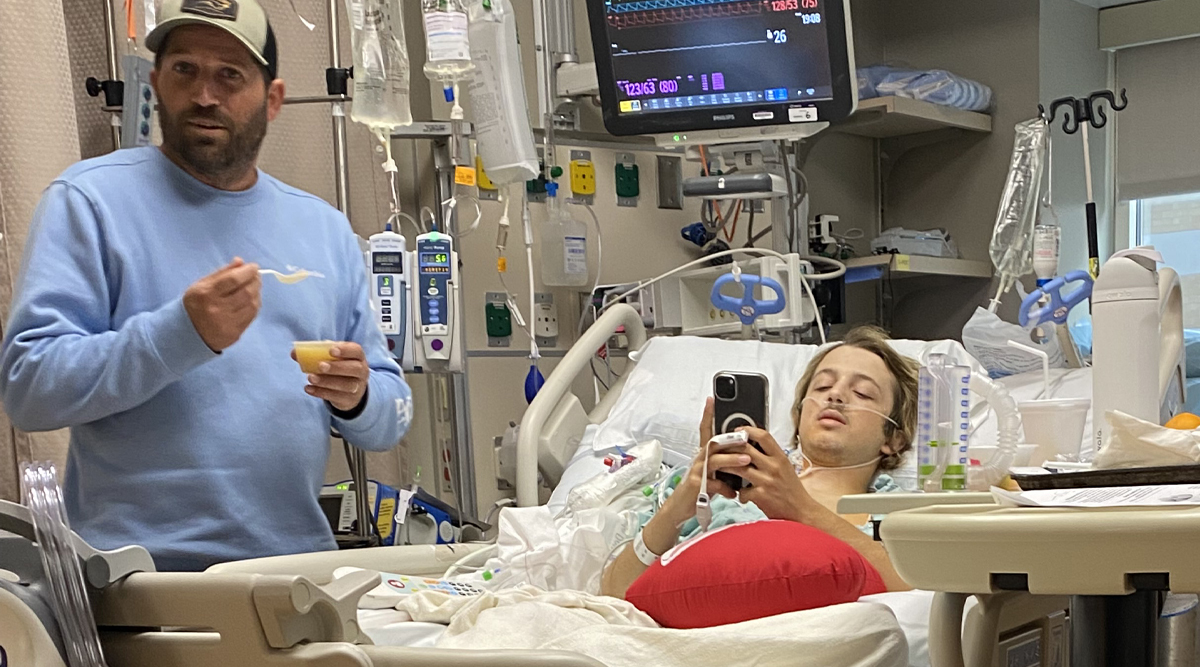
Last August, Drew underwent open-heart surgery at IU Health Methodist Hospital to repair an artery, but he is in good health now, his mom said.
“He is doing really well; he’s getting ready to turn 21, and he’s living on his own now, which is really exciting.”
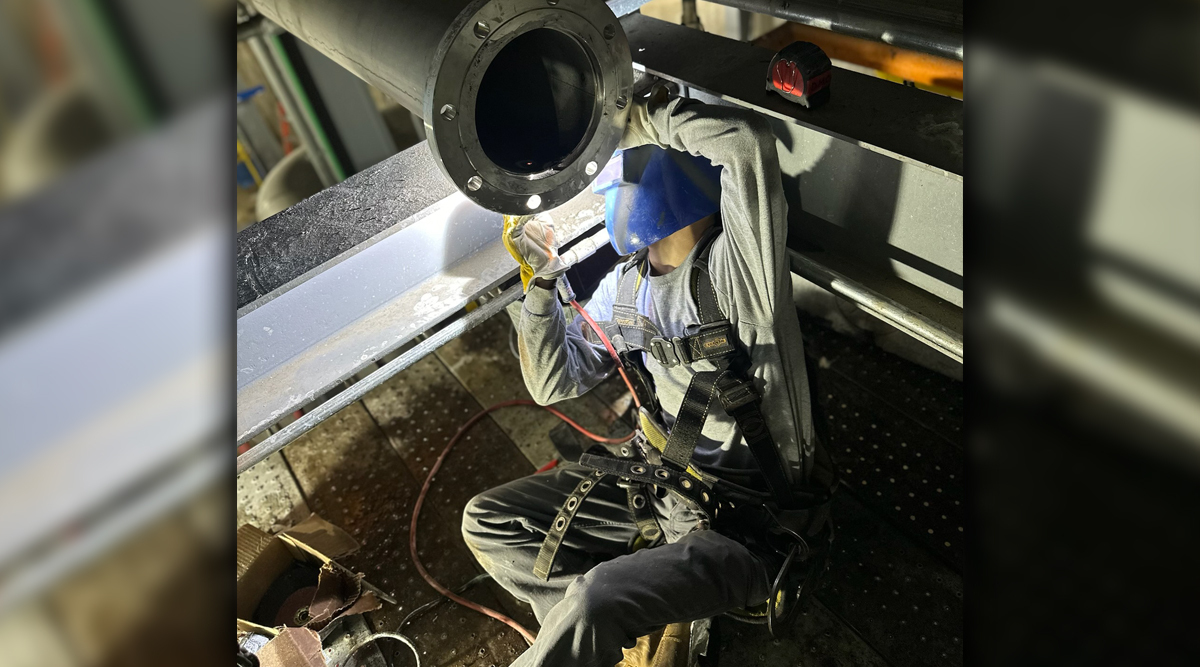
Drew is a certified welder, so his post-high school career is also flourishing. He golfs more than he plays tennis these days and helped coach the middle school golf team this year.
While the new AED law is good news for Dr. Kean and other advocates, he expects a lot of schools to be “blindsided” by the news.
“A lot of schools and organizations are going to have new requirements, and it’s unclear whether they are going to be ready for them.”
The move to install AEDs in schools, businesses and other locations where large numbers of people gather has been gaining momentum in recent years, following the cardiac-related deaths of students in school or during school activities.
This new law could place more demands on Riley’s program, Dr. Kean said, and he wants to be ready. Because it’s not just a matter of having AEDs onsite, staff must be trained in how to use them. He expects there will be more demand for the support and guidance of his small team, necessitating growth.
“There need to be operational AEDs at these events, and I would suggest what is most important is that the school or organization needs to have a plan – a cardiac emergency response plan that is current and made public so everyone knows. That’s what Project ADAM helps with,” he said.
“We have a turnkey system that we present to schools and organizations to comply with this law.”
As a parent, Laneia Strasser is relieved to be on the other side of her son’s cardiac scare and grateful for the care he has received over the past several years.
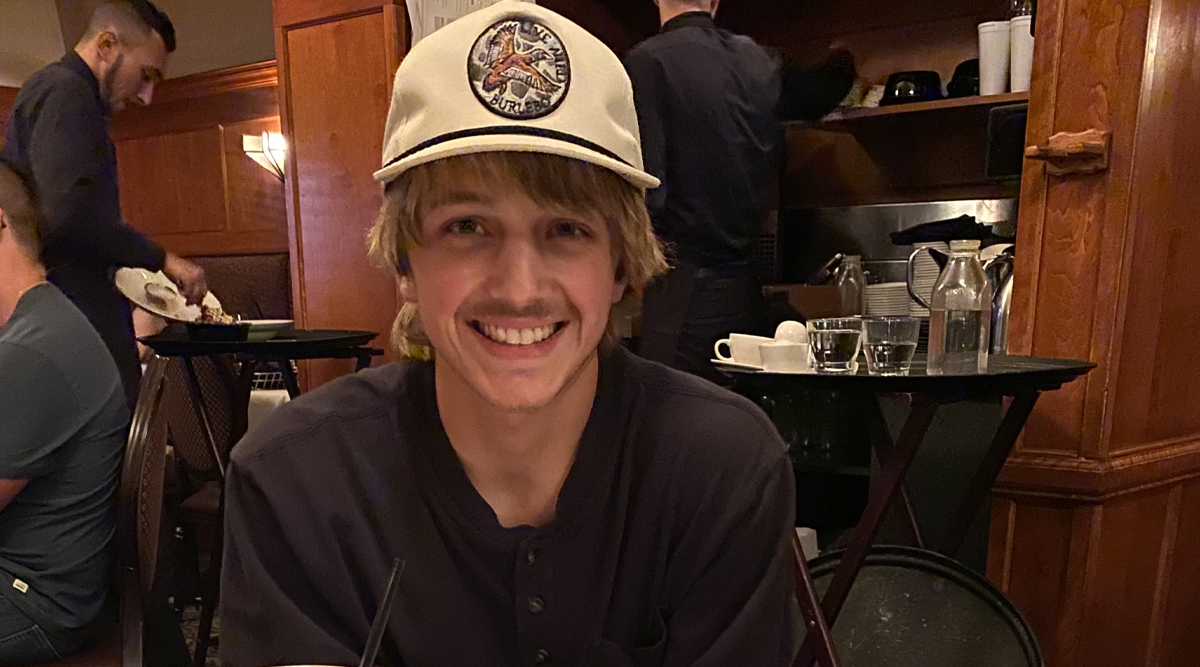
“He’s doing great and being the adult we expected him to be.”
As a varsity volleyball coach at Rochester Community High School, she also understands the importance of being prepared for health emergencies.
“The more prepared you are for bad situations, the better you’ll handle them,” she said. “It is so important to have a plan and practice that plan … and give kids the opportunity to live.”
Schools interested in learning more about Project ADAM and Riley’s Heart Safe School program can email projectadam@iuhealth.org.
Related:
How automated external defibrillator (AED) training saved a teen athlete's life - A high school tennis player was revived with an automated external defibrillator (AED) after suffering sudden cardiac arrest during practice. His doctor wants more people trained to do what the teen’s friend and coach did that day to save him.
Related Stories


