


Teen with cerebral palsy uses a wheelchair on land, but aquatics therapy gives her the mobility she craves.
By Maureen Gilmer, Riley Children’s Health senior writer, mgilmer1@iuhealth.org
Keyla Patton might not be able to walk on land, but in the water she is unstoppable.
Her grandparents call her their “little mermaid.”
The 16-year-old Indianapolis resident has cerebral palsy due to exposure to a virus in the womb. As a result, she is nonverbal and uses a wheelchair.
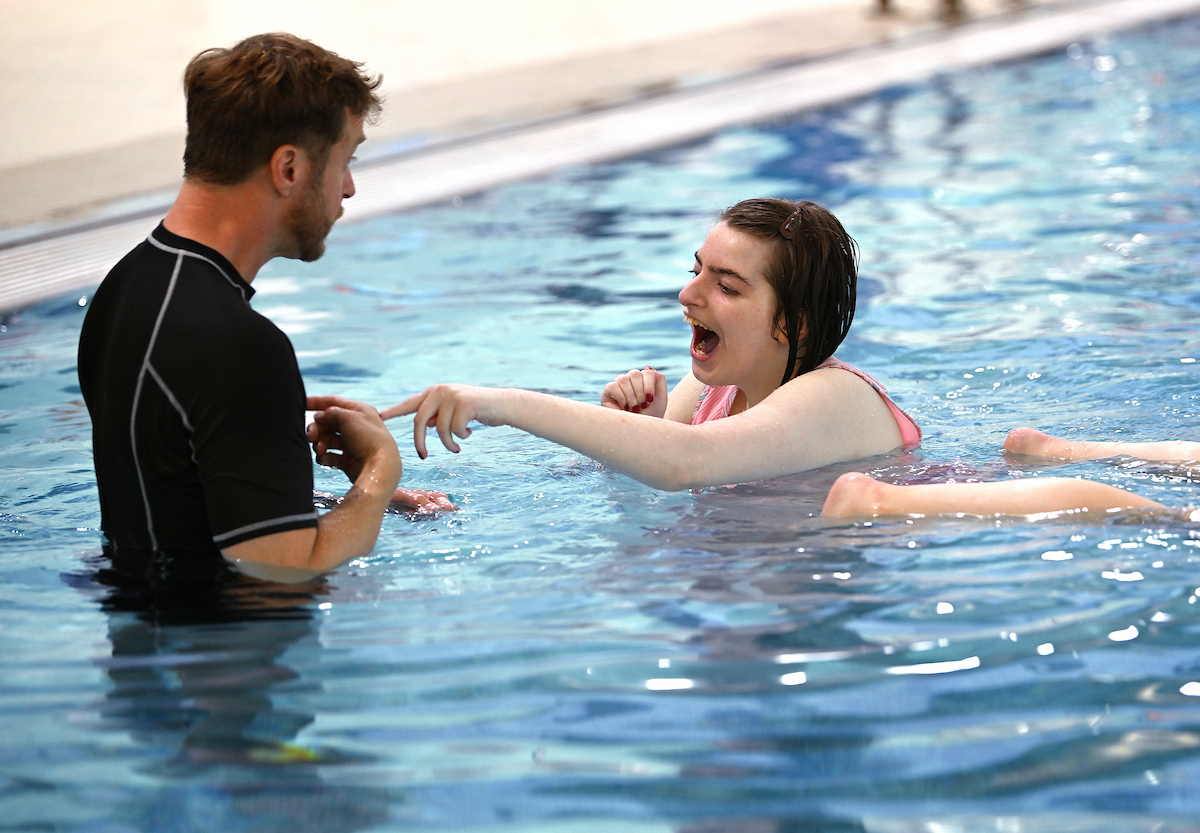
None of that matters in the pool. Keyla, working with Riley Children’s Health physical therapist Trevor Taylor, squeals with delight as she is lowered into the pool at Healthplex on the city’s west side. The water temperature is a soothing 88 degrees, and she is ready to show off.
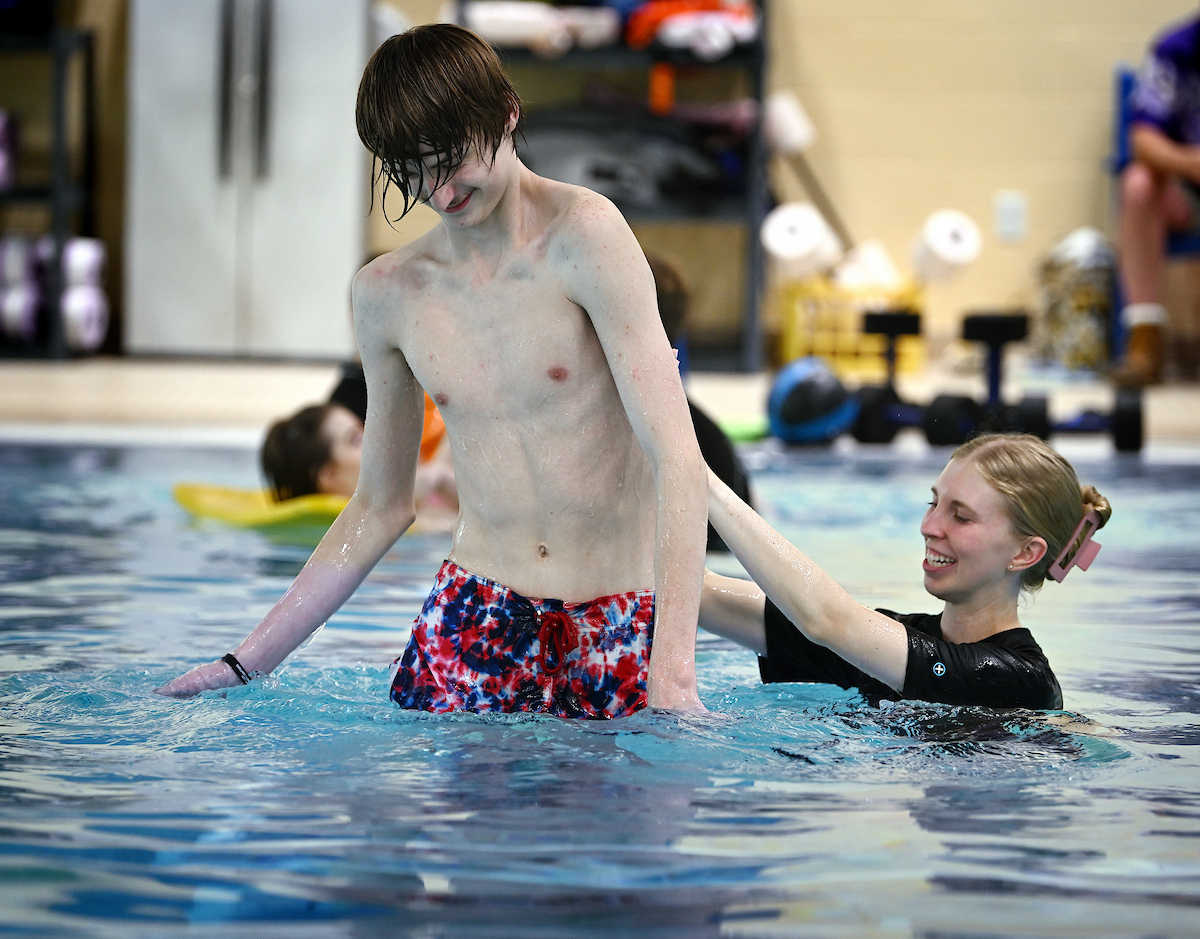
Nearby is her friend Jacob Johnson, also 16 and a Riley patient working with therapist Madeline Craw. The two like to compete in pool basketball and other games.
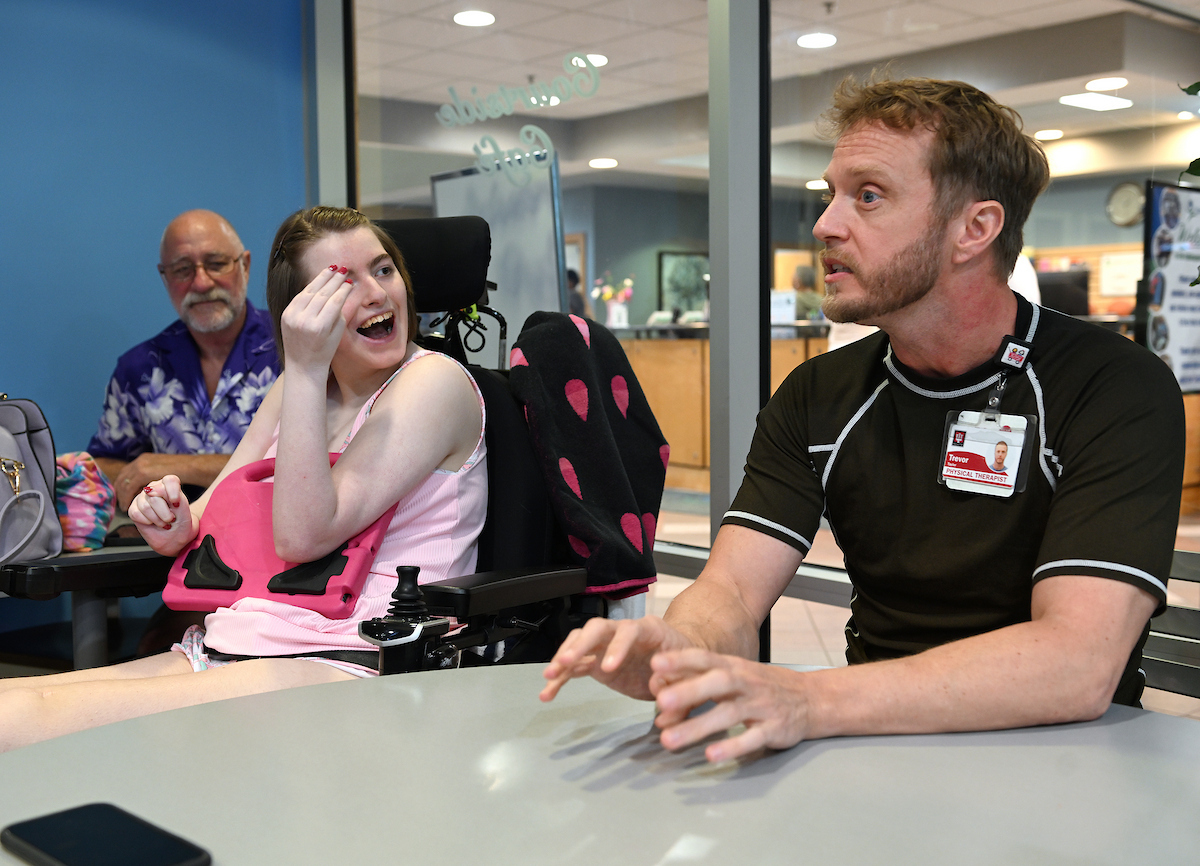
Taylor has worked with Keyla in the water for about three months. It’s sometimes hard to tell who is more excited about the therapy – Taylor or Keyla – because he radiates positivity, a trait that endears him to his patients.
Riley outpatient PT manager Sarah Johnson describes him as “magic in the water.”
For Taylor, the trick is in the water itself. He and Craw love helping patients boost their endurance, strength and confidence during intense 45-minute therapy sessions that look very much like fun.
“Right now, outside the water, Keyla is restricted in her chair, and we want to open up the world to let her do more and more,” he said. “The water is a great place for her to get those legs stronger, to get her confidence back up.”
Aquatics therapy for Riley patients has returned in the past year, thanks to an agreement with Healthplex to rent time in the pool each week. Years ago, hospital therapists worked with patients in pools around the city before the program was discontinued. Its roots, however, go back some 90 years.
On Sept. 5, 1936, President Franklin D. Roosevelt visited Riley to see its new hydrotherapy pool, designed to support patients with polio. It was built in part to replicate the center FDR founded in Warm Springs, Ga., which helped him in his own battle with the disease that left him paralyzed. The polio vaccine, introduced in 1955, transformed a terrifying epidemic into a preventable disease.
Water therapy has a number of benefits, Johnson explained. The pressure and warmth help patients experiencing pain to move and strengthen weak muscles. The buoyancy helps kids with neuromuscular conditions stand and walk without the risk of muscle breakdown or the fear of falling.
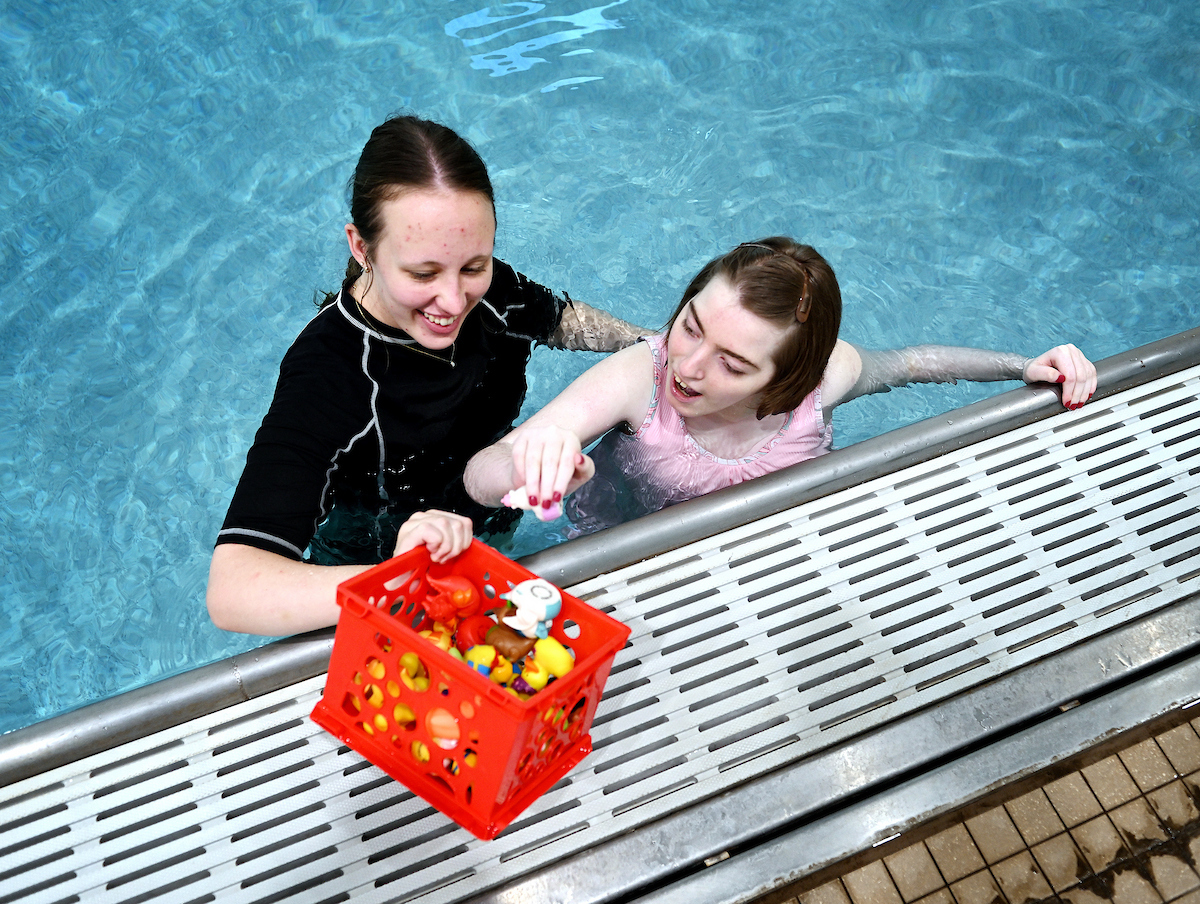
Taylor remembers the first time he and rehab tech Abbie Hawkins slowly transferred Keyla from her motorized wheelchair into a hydraulic lift, buckled her in and eased her into the water before letting her stand on her own.
“As soon as her feet hit the water, she was giggling,” he said. “She knew she was in for fun. There was no coaxing … she was ready to go around the whole pool.”
Grandparents George and Melissa Patton say Keyla has always been a water baby. Despite struggles, she began walking at the age of 7, but multiple surgeries on her hips and knees, then COVID lockdowns, interrupted her progress.
Over the years, Keyla has also had occupational therapy, physical therapy, feeding therapy and robotic therapy, Melissa Patton said, “but her favorite is aquatics, no question.”
“I see her walking again, and I really attribute that to aquatics because she’s walking in the water like she was on land,” Patton said. “The memory, the desire is still there.”
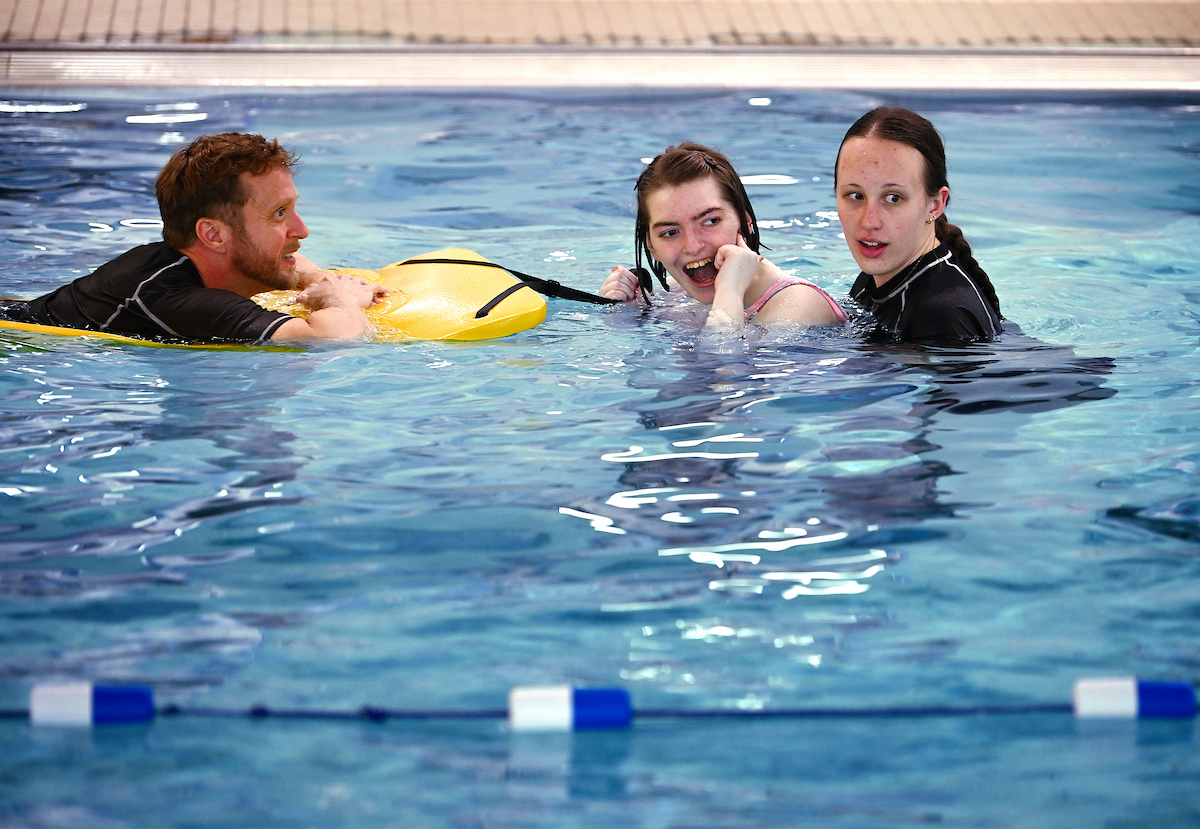
Taylor would love to see it, but for now, he said, the goals are to get her legs stronger and make transfers in and out of her wheelchair easier.
“Let’s see what we can do next,” he said. “Now, I can be two or three steps away from her and trusting that she can keep her own balance. It’s slowly giving her more independence.”
Water is the great equalizer, he believes. “We’re all floating together; we’re on the same level for a bit. She feels like she’s part of the community, and that’s what I want to see.”
Witnessing how much Keyla has achieved in the past three months is its own reward, Taylor said.
“It’s been super exciting to see how much she’s really grown and expanded her own environment. It’s a joy to see.”
Photos by Mike Dickbernd, IU Health visual journalist, mdickbernd@iuhealth.org
Related Stories


