


The IU Health International Pediatric Complex Care Conference combined multidisciplinary education, hands-on simulation and peer-to-peer exchange with clinicians from Bermuda and beyond.
Bringing pediatric specialists together across borders creates impact that extends far beyond the event itself. By sharing expertise, building clinical capability and fostering relationships to draw on when a challenging case arises, these connections help advance pediatric care in communities around the world.
Developed by the IU Health International Team, the IU Health International Pediatric Complex Care Conference in Bermuda marked the first international conference hosted by IU Health. Twelve Riley Children's Health faculty members representing nine specialties delivered 21 presentations for local and international healthcare professionals, creating a multidisciplinary event focused on contemporary approaches to caring for children with complex disease.
The intentionally focused gathering brought together more than 70 participants from Bermuda, the United Kingdom and the United States. Attendees included pediatricians, primary care physicians, advanced practice providers, nurses and other healthcare professionals involved in caring for children.
"Bermuda was the right place at the right time," said Mark W. Turrentine, MD, conference director and chief of congenital heart surgery at Riley Children's. "We wanted to take education beyond the confines of our own institution and provide meaningful support to clinicians in other communities."
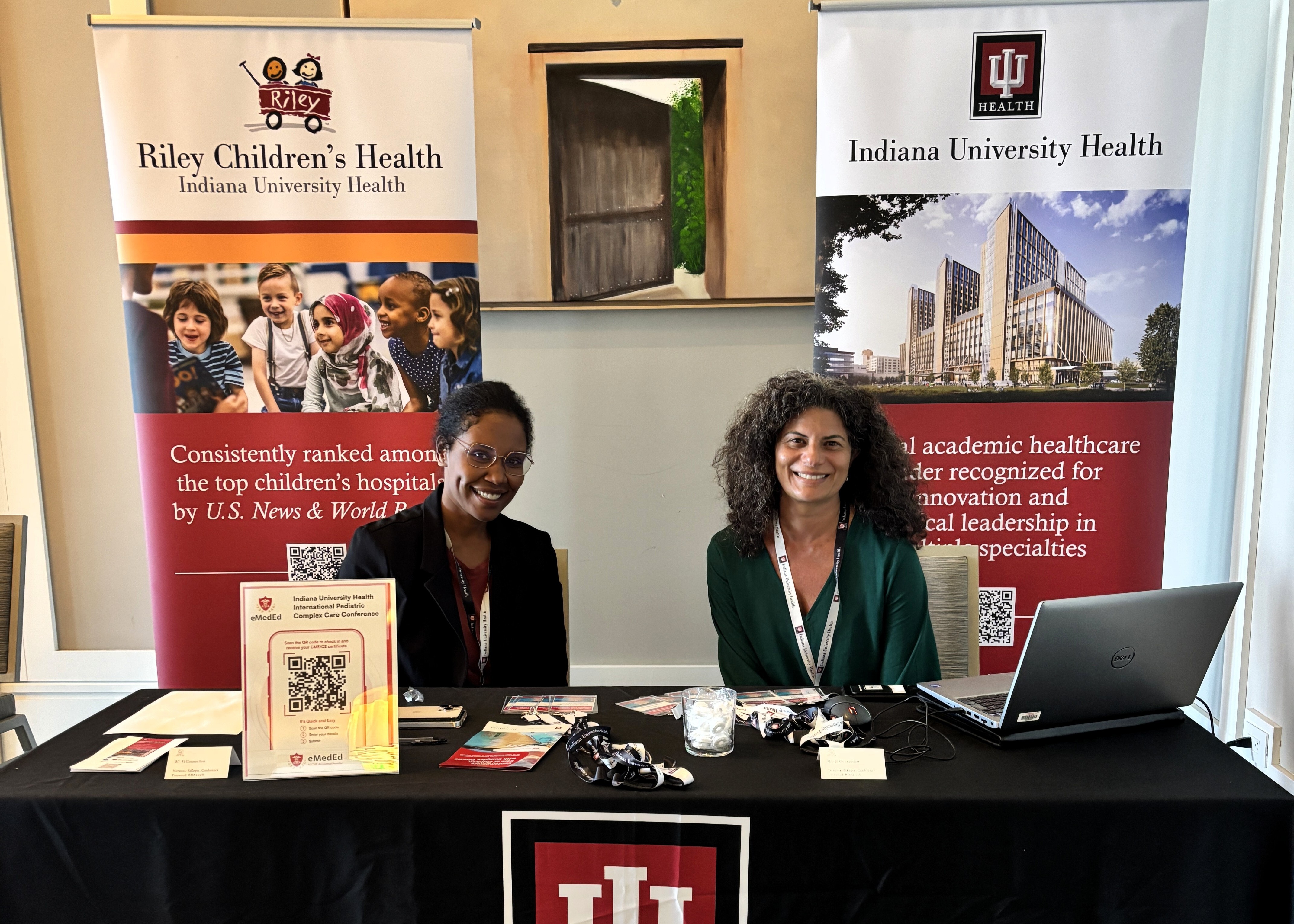
Multidisciplinary expertise for complex pediatric care
The program brought expertise that is not routinely available together in an island setting, including fetal diagnostics, congenital heart surgery, cardiac genetics, neonatal stabilization, pediatric trauma and complex airway management.
Each presentation invited dialogue about how the evidence, approaches and clinical guidance could be applied within participants' own care settings. Clinicians could ask questions about difficult cases and learn
from nationally ranked specialists who routinely care for high-acuity and uncommon conditions.
"This gives us an opportunity to learn from people at larger institutions who see greater volumes and different pathologies," said Sylvanus Nawab, MD, a pediatrician with Bermuda Pediatric Center and a member of the conference program committee. "We may not see those cases as often, but we can learn what to do when we do."
An opening global health roundtable explored the challenges of providing care in geographically isolated or resource-limited settings, clinical support models, local program development and skills transfer. The discussion gave Riley physicians a better understanding of how care is delivered in Bermuda and other island communities, while clinicians shared approaches shaped by their own patients, resources and healthcare environments.
"At IU Health, we have tremendous pediatric expertise within Riley Children's Health, and I believe part of our responsibility is finding meaningful ways to share that expertise beyond our own walls," said Elaine G. Cox, MD, executive sponsor of the conference. "But what makes this especially valuable is that the learning goes both ways. We're building relationships with clinicians who bring their own experiences and perspectives, creating connections that can continue long after the conference ends."
Hands-on ultrasound training builds practical skills
The conference concluded with a point-of-care ultrasound, or POCUS, workshop led by Drs. Michael Lintner-Rivera and Riad Lutfi, with the Riley Children's Health Simulation Program. In small groups, participants used live models and interactive simulation manikins to learn to accurately use point-of-care ultrasound, a technology newly available in their community, and practiced cardiac, vascular, lung, abdominal and trauma-focused applications.
For Lunette Castillo, a family nurse practitioner who has worked in primary care for 15 years, the workshop provided her first opportunity to learn point-of-care ultrasound.
"In Bermuda, where access to imaging such as MRI or CT can sometimes be more difficult, learning basic ultrasound skills can help us make more immediate care decisions," Castillo said.
For Dr. Nawab, access to knowledge and technology is ultimately about being better prepared for the child who needs it. "We may not use a technology every day, but if having it improves the care we can provide for even one child, it makes a big difference," he said.

Relationships that continue after the conference
The conference also created time for clinicians to build professional relationships across institutions and communities. Those connections can support future consultations, continued sharing of knowledge and a deeper understanding of the resources available when a child needs more specialized care.
"First and foremost, I hope participants leave with relationships," Dr. Turrentine said. "If they encounter a question or a challenging case, they now have colleagues they can reach out to and consult."
The conference also reflects the mission of IU Health International Patient Care Services: fostering global clinical collaborations through consulting, training and knowledge exchange. By supporting local care whenever possible and developing trusted referral pathways when specialized services are needed, the team helps strengthen healthcare capabilities around the world while connecting patients of all ages to expertise across IU Health and Riley Children's Health.

Related Stories


Related Doctors

