


A native of Belize, Dr. Francis Marshalleck started the interventional radiology program at Riley more than 20 years ago.
By Maureen Gilmer, Riley Children’s Health senior writer, mgilmer1@iuhealth.org
Growing up in Belize in Central America, Francis Marshalleck used to sit on the floor of his humble home and write down numbers for his mom as she cut out patterns and measured local women for clothing.
A seamstress and a single mother, she worked hard every day, he recalls, and the lessons he learned at her feet still guide him today.
She never finished high school and never married, but “she gave me my work ethic,” says the retiring interventional radiologist at Riley Hospital for Children. “She used to joke that her sewing machine was her husband. She was smart, and she worked really hard.”
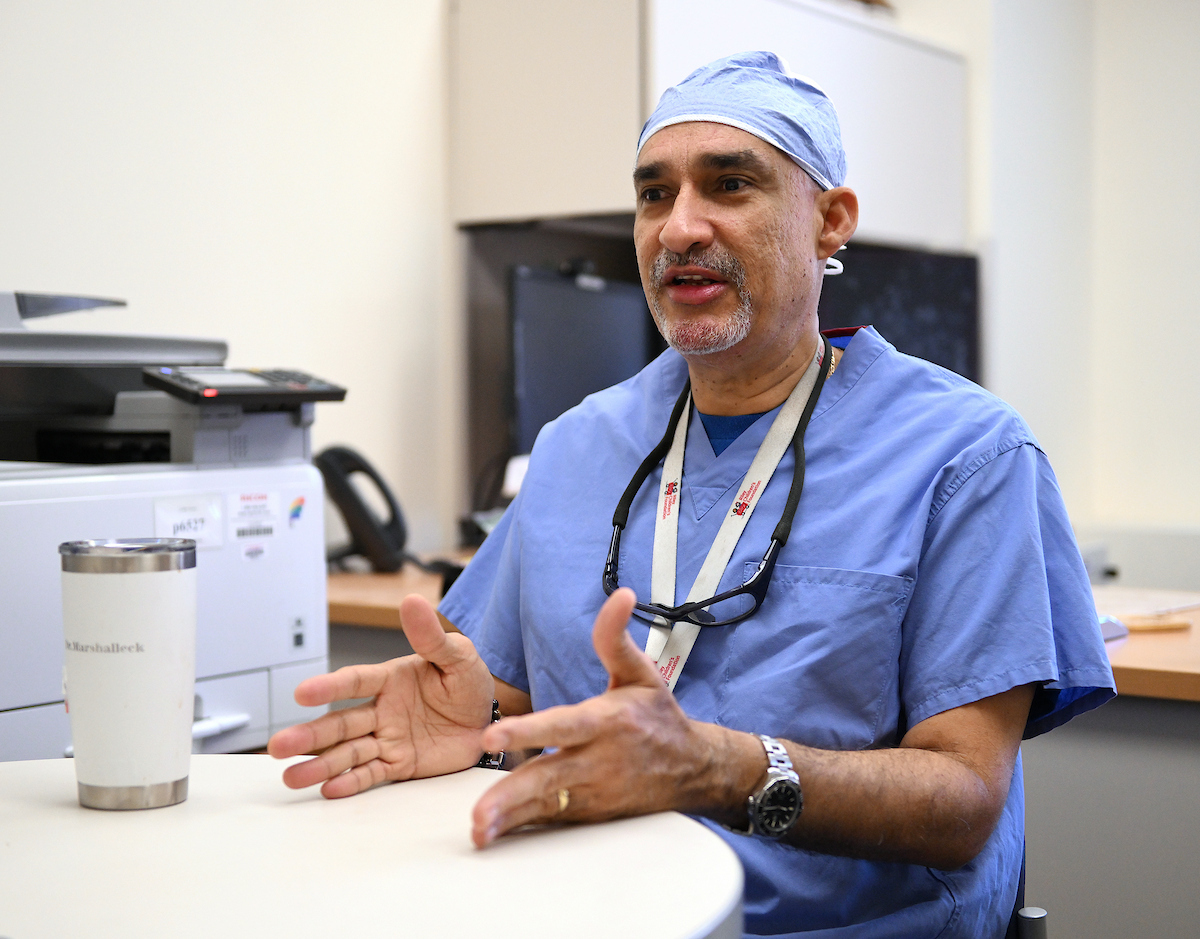
He’s a long way from Belize today, but the 59-year-old holds the tiny country (population 417,000) in his big heart, always eager to share stories and photos from his time there.
He’s an ambassador of sorts for his homeland, where he and his wife, Stephanie, plan to spend chunks of their retirement volunteering in the local community. But Indianapolis is home as well.
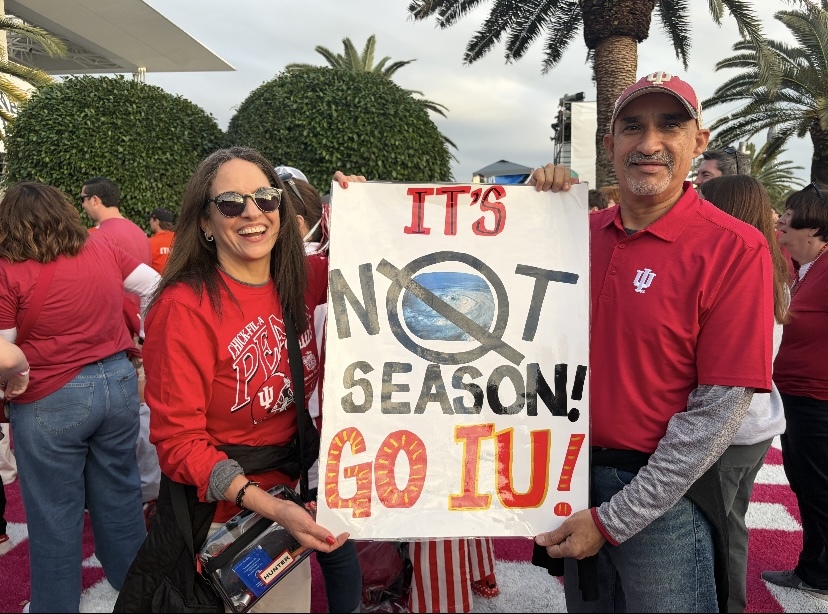
“We love Indy. It has been very good to us,” said the father of three, a huge sports fan (and avid pickleball player) who shares his love with all Indiana teams – college and pro. Most recently, he and his wife followed IU on their historic run to the college football national championship in Miami.
Dr. Marshalleck came to IU Health/Riley in the early 2000s and launched the interventional radiology program on his own in 2003.
Interventional radiology (IR) is a medical subspecialty that uses advanced, real-time imaging — such as X-rays, CT scans or ultrasound — to guide minimally invasive, targeted treatments. It is an alternative to open surgery, allowing for smaller incisions, less pain, lower risks and faster recovery times for conditions like cancer, vascular disease and bleeding.
Originally interested in general surgery, he pivoted to radiology as a newlywed, eager to preserve a good work-life balance. He would not be where he is today without his wife, he said, not as an afterthought but as a recurring theme throughout this interview.
He took a circuitous path to get to Indianapolis, leaving Belize on a scholarship to get his undergraduate degree in Colorado, before starting medical school at the University of the West Indies (also on scholarship) in Jamaica. Even that leg of his education was delayed when a hurricane in Jamaica forced him to wait a year, so he taught science at his old high school in Belize during that time.
After medical school, he returned to Belize to work in an emergency department for two years, before enrolling in the University of Texas at Houston to specialize in radiology. A yearlong training program in Miami followed, in addition to a year in Toronto for pediatric IR.
Launching a pediatric IR program at Riley took some time, he says.
“I did it by myself for 15 years with one nurse. I literally started in a closet. Now, we have three doctors, six nurses, six techs and two advanced providers. My colleagues are amazing, and I’m leaving it in great hands,” he said. “They will take it up a notch.”
He stepped down as director of pediatric interventional radiology two years ago in anticipation of his retirement, but he has continued seeing patients and operating every day, contributing to the tens of thousands of procedures he has done over the years.
Dr. Marshalleck is beloved by his team not just for his medical skills, but for his humility, his sense of humor and his passion for life.
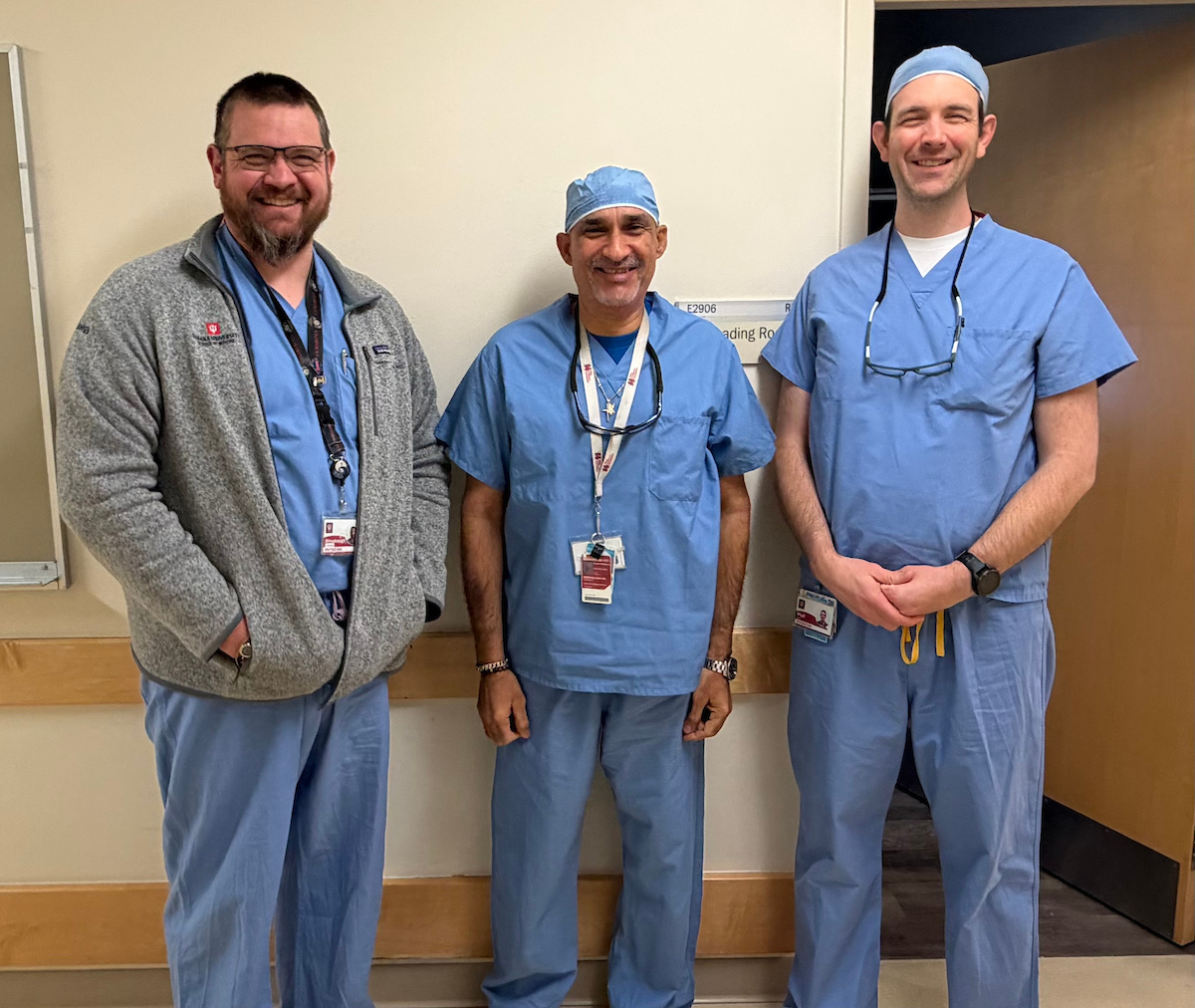
When Dr. Sean Pfaff moved to Indianapolis in 2017 to join the IR team, he had no family, so he found himself celebrating Christmas and Thanksgiving with the Marshalleck family.
“Francis and his family have been very welcoming and supportive,” said Dr. Pfaff, who now leads the program. “He’s great with patients and referring doctors … always putting patients first. He’s been a great mentor and colleague. He built something incredible here at Riley. Definitely top 10 program.”
Through it all, Dr. Marshalleck said his Catholic faith has been a constant; he and Stephanie are active in their parish – St. Monica on the Northwestside. He credits that faith for keeping him humble.
“If you’re a physician and you think you’re the best thing since sliced bread and you soak in all the accolades, your failures are going to hurt more,” he said.
And there will be failures.
“I tell trainees, you prepare, you do your best, and then it’s God’s will. That gives you humility.”
Another piece of advice he gives to students: Set boundaries.
“As an immigrant, the attitude is work, work, work,” he said. “There are many days where I probably stayed too late. I tell young people they have to set boundaries, especially if they have a family. You can’t take that for granted.”
His last official day at Riley is the end of this week, but Dr. Marshalleck has agreed to work occasionally to fill the gap until a replacement physician can be hired.
“I feel happy about what I’ve accomplished, but it’s time to do other things, too, charitable things.”
He and his wife, a former marine biologist-turned-licensed clinical social worker, will split their time between Belize and Indy, as their adult children move into their careers.
“In my next chapter, I want to do good things. I always tell trainees that medicine is great, but it’s a job and it shouldn’t be your only identity,” he said.
“I’m a child of God first of all, a husband, a father. You have to be wise in your job, do good things and help people.”
Photos submitted and by Mike Dickbernd, IU Health visual journalist, mdickbernd@iuhealth.org
Related Doctor

Francis E. Marshalleck, MD
Related Stories


Related Doctors