


Dr. Charles Stevenson is charged with leading the division to new heights: “Everyone wants to build, and they want to grow.”
By Maureen Gilmer, Riley Children’s Health senior writer, mgilmer1@iuhealth.org
Dr. Charles Stevenson is dressed in a suit and tie on the day we meet, but you’re more likely to see him in scrubs as he checks in with patients at Riley Hospital for Children and tours the operating room suites that will be his home away from home.
The new chief of the neurosurgery division at Riley joined the team just a month ago, but he hasn’t wasted any time getting familiar with the program and sharing his vision for the growth he sees ahead.
It’s a long way from southern Louisiana, where he grew up the son of a helicopter pilot and a nurse, yet he is confident he is right where he is supposed to be.
“It’s really hard to know exactly what a place is like until you arrive and immerse yourself,” he said.
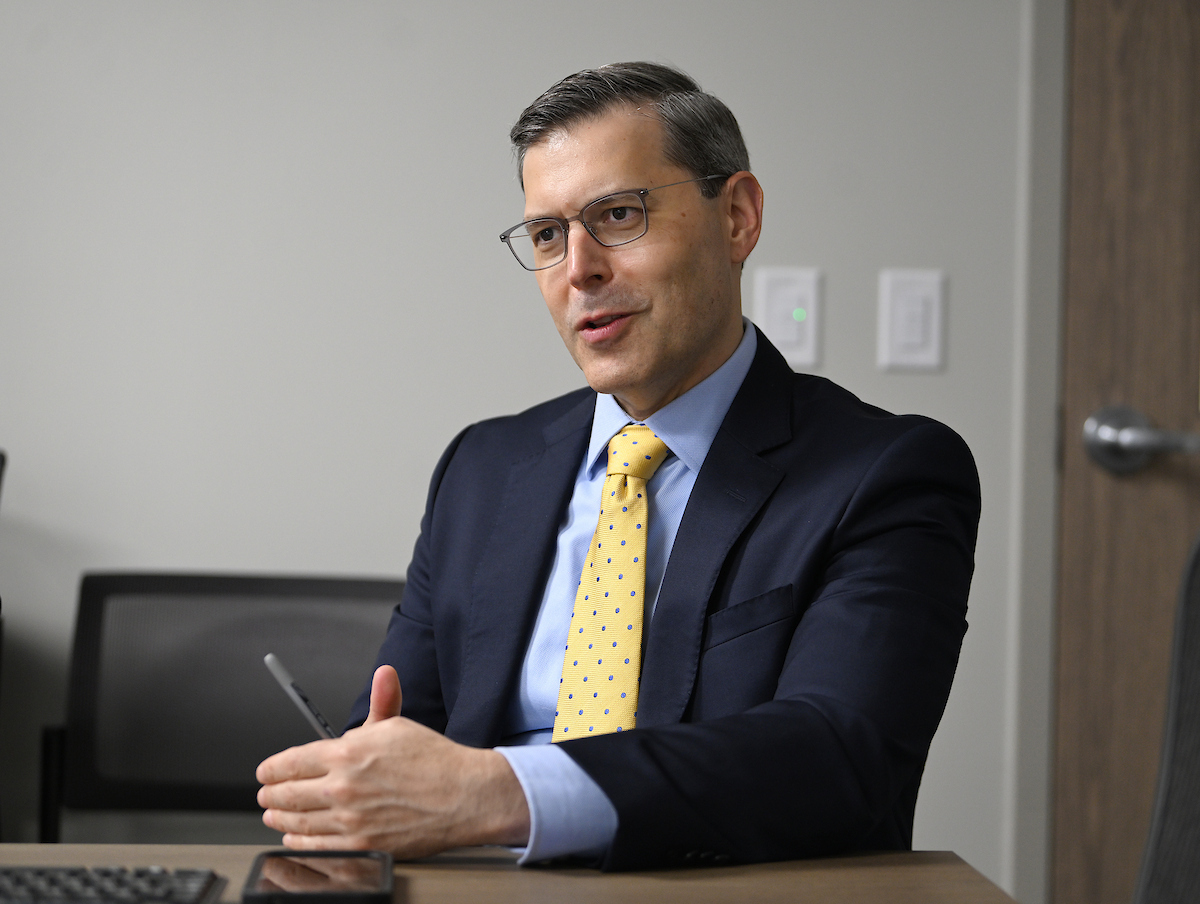
While he had spoken to the faculty at Riley many times during the course of his interviews, he also spent time talking to people in different specialties in different parts of the hospital.
“That ultimately was the clincher for me because it’s pretty evident once you spend some time here that everyone is very dedicated and very kind. You can see how committed they are to providing excellent care to patients and their families.”
While every children’s hospital has a core group of people guided by that mission, he said, the culture is not always what you might expect.
“Sometimes there are other measures that can get in the way,” he said. “But everyone here is open to doing more and doing it well. It’s not an obstructionist culture. Everyone wants to build, and they want to grow, and to me it feels very genuine.”
Dr. Stevenson has a wealth of experience in pediatric neurosurgery, most recently at Cincinnati Children’s Hospital, where he completed his fellowship in pediatric neurosurgery and spent 15 years growing its specialty and subspecialty programs. Last year, he received the Resident Teaching Award for the Department of Neurosurgery at the University of Cincinnati College of Medicine.
He earned his undergrad degree from Southern Methodist University in Texas and his medical degree from Vanderbilt University, where he completed his neurosurgery residency and a fellowship in neurosurgical oncology.
He remembers the moment he decided to move into neurosurgery. It was the first night of a two-week rotation in the area while in medical school.
“I called my mom and dad and said, ‘I think I want to be a brain surgeon,’ adding, ‘The stuff I saw today was absolutely incredible.’ ”
It was at Vanderbilt where he got a small taste of celebrity when he and several of his fellow residents were featured in a TV reality show called “Resident Life” on The Learning Channel.
The year was 2003, and he was in his third year of neurosurgical residency.
“I was volun-told,” he laughs about it now, but said at the time he hoped to give people “an inside view” of what resident life is like. “If their only knowledge of medicine is what they saw on ‘ER,’ they don't have a good idea of what residents do.”
His picture even made it into a TV Guide back then, he said, but unearthing a copy, especially in the midst of his move, seems an insurmountable task, at least in time for this article.
The young resident moved on from his small-screen debut to establish an impressive career in pediatric neurosurgery at Cincinnati, before joining the Riley team as division chief and the inaugural Leah Mindling Abrams Chair in Neurosurgical Oncology in early July.
His arrival in Indianapolis has been embraced by senior and junior members of the neurosurgery team alike.
“I think he’s tremendous,” said longtime faculty member and former acting chief Dr. Laurie Ackerman. “He brings a wealth of knowledge and experience, not only in his areas of interest (brain and spine tumors, endoscopic cranial surgery, fetal surgery for myelomeningocele, tethered spinal cord, spasticity, Chiari malformation), he’s also held numerous leadership positions on national committees … and will bring fresh eyes.”
She is eager to see him move the neurosurgery program to the next level with the development of subspecialties that will offer greater access to patients and families who won’t have to travel as far for the care they need.
At 50, Dr. Stevenson is mid-career and brings both energy and experience to Riley’s team of six neurosurgeons.
“We have a full complement of specialized surgeons … we really have an outstanding team,” Dr. Ackerman said. “It’s the deepest bench since I’ve been here.”
“The stable is full,” Dr. Stevenson agrees. “All the thoroughbreds are ready to go.”
Lest you think this doctor is wired for surgery only, he has a deep and abiding love of music. He enjoys classic rock, R&B, ’90s and alternative music and usually has something playing low in the background while he operates, he said.
“And, if I ever have a few minutes of downtime on a weekend, I enjoy reading about the history of modern music: how and why certain songs were written or how classic albums were recorded, engineered and produced in the studio. Unfortunately, I do not play an instrument — I certainly wish I did. Both of my children (ages 8 and 10) now play piano, and I very much enjoy listening to them.”
The new chief, who goes by Chuck, is still learning his way around the hospital, but he’s already dipped his toe into surgery several times, recently joining Dr. Jignesh Tailor for a brain stem tumor resection, for example.
Having a surgeon with Dr. Stevenson’s breadth of knowledge beside him in the operating room and on the research side is exciting, Dr. Tailor said.
“His level of expertise gives you a lot more confidence and helps elevate all of us,” said the younger surgeon, who has been at Riley for four years. “He’s bringing that higher level of mentorship and guidance to help elevate our game.”
That’s exactly what Dr. Mitesh Shah, chair of the Department of Neurological Surgery at Indiana University School of Medicine, was looking for when casting about for the best person to fill the position.
“We have some young talent at Riley who are going to develop into excellent, mature surgeons,” Dr. Shah said. “We do the most complex procedures on our most precious people at Riley, and I think having someone with seniority and maturity like Chuck is so crucial for the mentorship of these young surgeons. That’s where I see his advantage come through. He really gets it. It’s not about himself. It’s about helping the team and the program.”
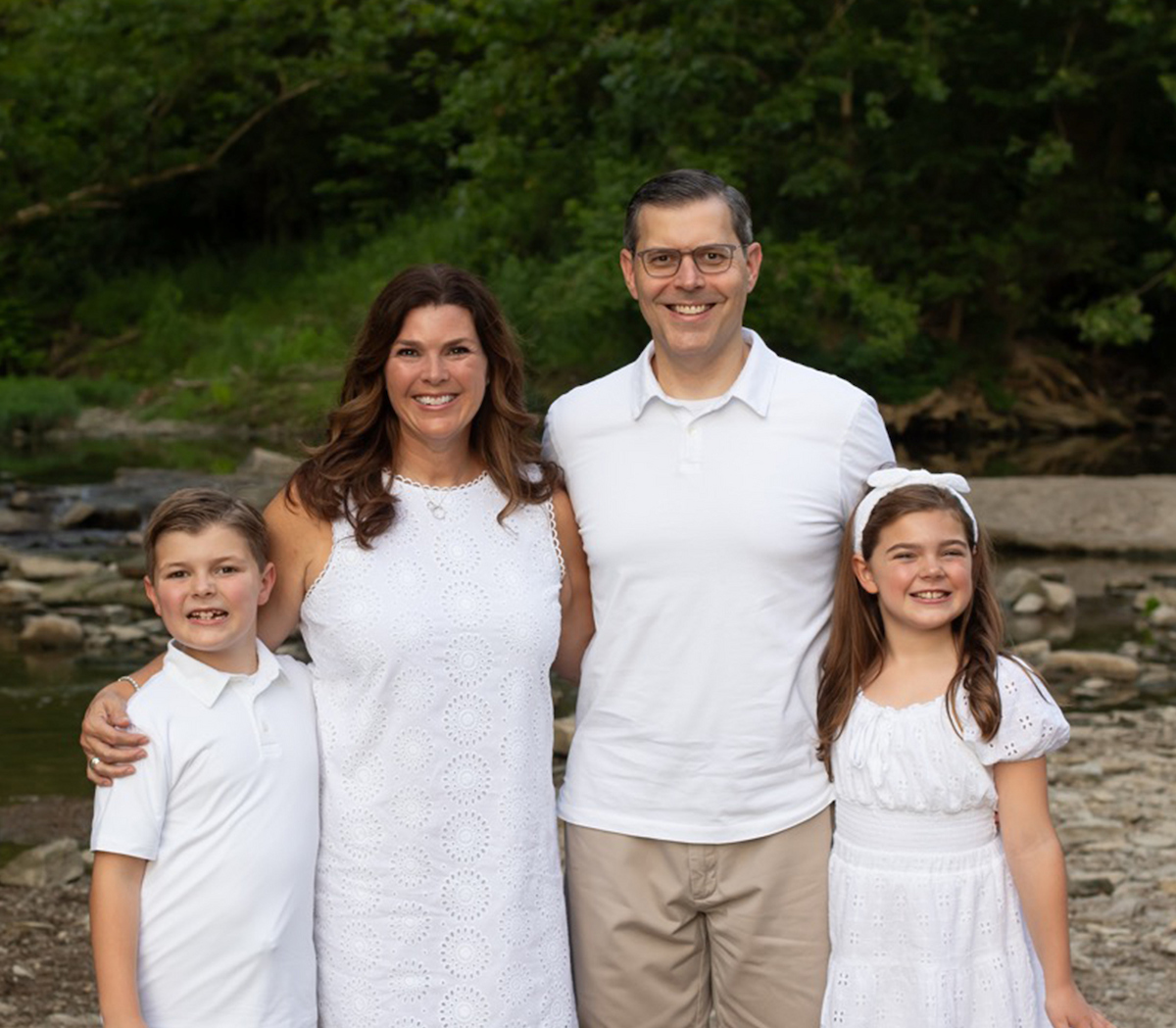
Dr. Stevenson and his wife, Dana, whom he met at Vanderbilt when she was an ICU nurse, have bought a home in Carmel, where they will be raising their young family.
It’s a good time for a career move, he believes, while the kids are still young and he has plenty of “juice” left in the tank.
Having the opportunity to not only lead the pediatric neurosurgery program at Riley but also expand its impact and reach was too good to pass up, he said.
Still, he thought long and hard before throwing his hat into the ring.
“My wife would tell you I don’t make any decision lightly. I think about it, then think some more, then I ruminate, and then I obsess some more,” he said with a laugh. “I do a lot of research and analysis.”
Riley, he said, is a very good children’s hospital with a long and storied history in pediatric neurosurgery. The surgeons on staff are fantastic, he added, but the next step is to develop and grow specialty and subspecialty programs that draw patients from around the Midwest.
Dr. Shah says the new chief is just the person to do it, not just because of his surgical, educational and research skills, but because of his “soft skills.”
“He truly has the emotional IQ to be a good leader. One of the attributes that doesn’t appear on his CV or resumé is how he relates to people. I think that is one of the toughest jobs a leader can have,” Dr. Shah said.
“Good leaders know how to build a team around them to really be successful, and he has a track record of success,” he added, noting that his “hope and prayer” is for Dr. Stevenson to lead the program for many years to come.
“Riley deserves someone with longevity who builds something that really distinguishes the pediatric neurosurgery programs we’re building from any other place in the Midwest and nationally, and I think we can do it,” he said.
Dr. Stevenson is ready to do his part to make that happen.
It’s one thing to be really good at practicing what the state of the art in pediatric neurosurgery is, he suggested, but with the right team and the investment of time, talent and treasure, his goal is to create something bigger and bolder.
“There are endless opportunities to do that here, and with that will come increasing recognition from referring physicians and from patients and families as we provide more of the services they deserve closer to home.”
Photos submitted and by Mike Dickbernd, IU Health visual journalist, mdickbernd@iuhealth.org
Related Doctor
Charles B. Stevenson, MD, FAANS, FACS, FAAP
Related Stories


Related Doctors