


Ellie Darner was born with a cleft palate, which makes eating a challenge, but she is thriving under the care of Riley’s cleft and craniofacial team.
By Maureen Gilmer, Riley Children’s Health senior writer, mgilmer1@iuhealth.org
To look at her, you wouldn’t know the struggles little Ellie Darner has already been through at not quite 4 months old.
Born in Terre Haute with a cleft palate that went undiagnosed for nearly a day, she ended up in the NICU for a week with a feeding tube, then was diagnosed with obstructive sleep apnea and requires oxygen at night.
But when doctors in Terre Haute referred her to Riley Children’s Health, Ellie’s parents, Devin and Alexandria Darner, knew they were in the right place.
That’s where Ellie and Alexandria were today, the last day of Cleft and Craniofacial Awareness Month, to meet with a team of specialists in clinic who support parents and babies through the cleft and craniofacial journey.
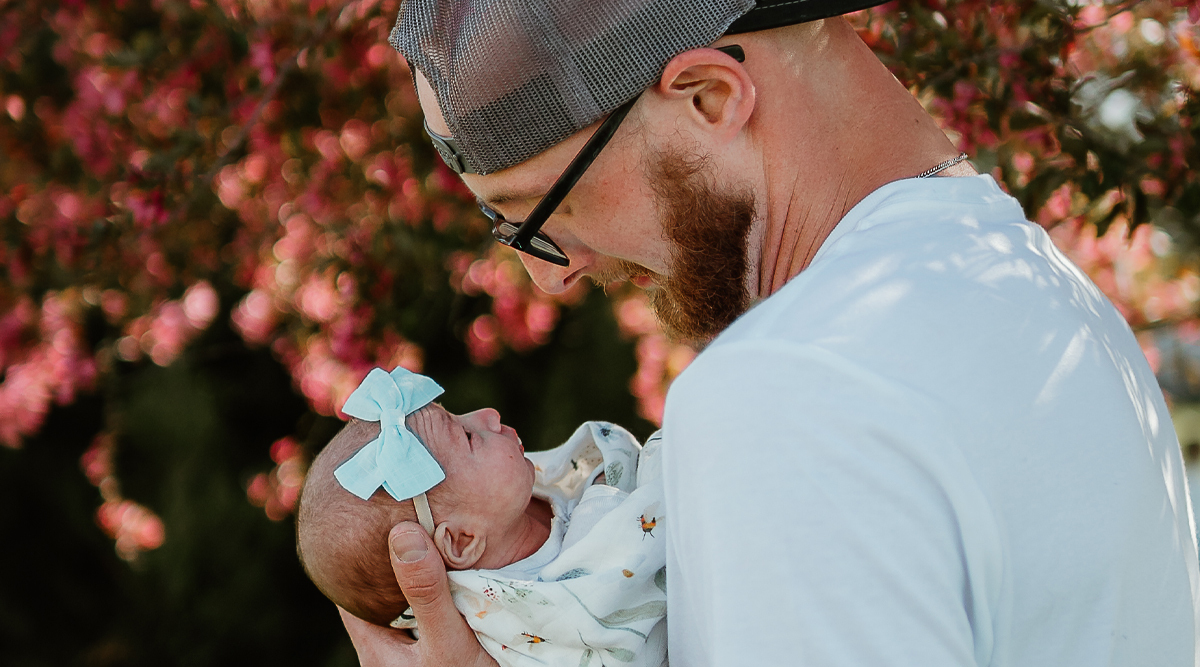
Cleft lip and cleft palate are the most common birth defects affecting the face. Cleft lip is a separation of the lip, and cleft palate is an opening in the roof of the mouth. Both can affect feeding, growth and development.
In Ellie’s case, she was born with cleft palate, which is not something visible unless you’re looking for it. So when Alexandria was trying to breastfeed her newborn after birth, it was frustrating for her and baby because Ellie wasn’t able to suck properly.
It was a lactation consultant called in later that night who took a closer look to identify the problem.
A referral to Riley’s Cleft and Craniofacial team, the largest in the state and among the oldest (1933) programs like it in the nation, has been a lifesaver, Alexandria confirmed.
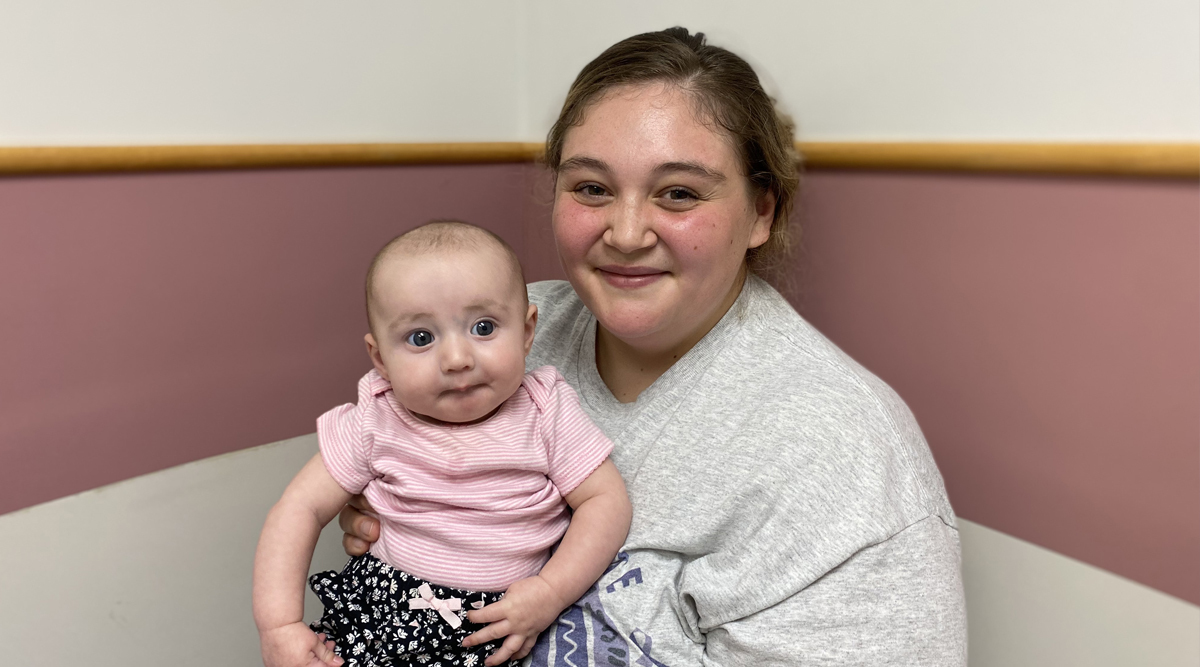
“It was really hard, but we’re doing a lot better,” the mom of four said. “The cleft team here at Riley is awesome. I don’t know what we would do without them.”
At today’s appointment, speech-language pathologist Madison Hagerty, dietitian Cindy Carmack and developmental pediatrician Dr. Kaitlyn Edwards are meeting jointly with mom and baby to evaluate Ellie as she drinks 3 ounces of formula from a bottle.
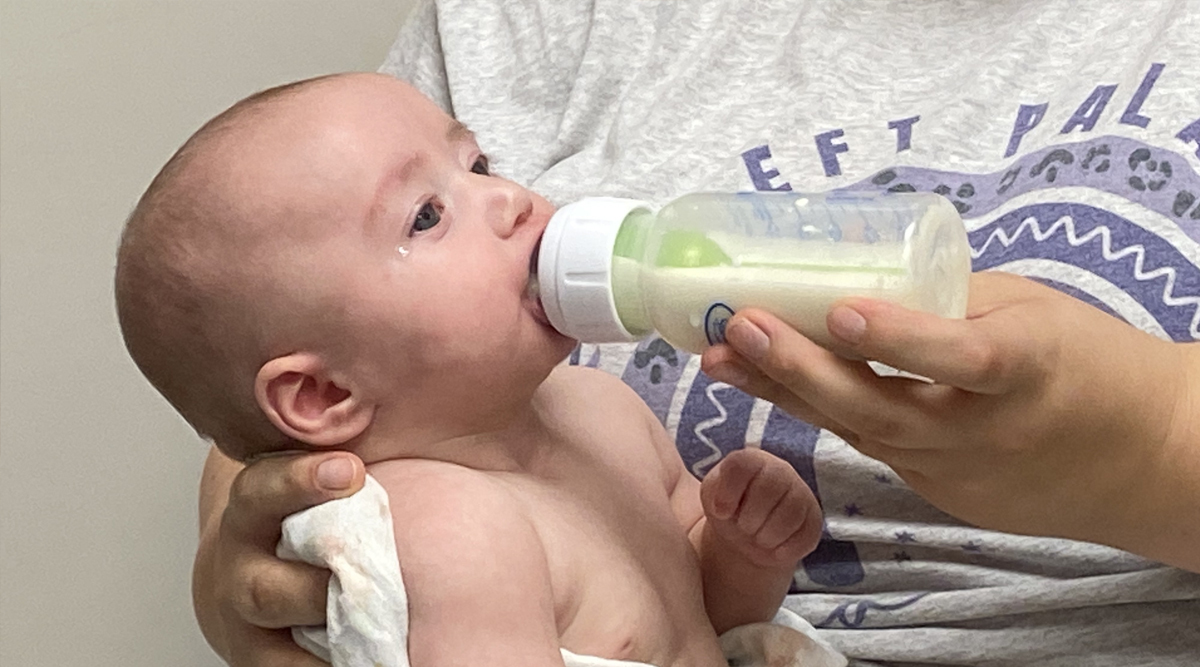
Because she can’t use a typical nipple, her bottle is outfitted with a cleft disc in the nipple that allows the milk to flow using a compression pattern vs. a suction pattern, Hagerty explained.
“I’m watching the bottle feeding to make sure she is swallowing safely and that she is efficient with the bottle,” the specialist said. “We don’t want bottle feeds to take longer than 15 to 30 minutes.”
If necessary, the nipple flow rate can be adjusted to take in more or less, depending on how Ellie is swallowing and how long it takes her to finish.
While Dr. Edwards is monitoring her overall growth and making sure she is hitting developmental milestones, Carmack is also looking at her growth and ensuring the volume and calories consumed are sufficient to support adequate growth.
“Her growth has slowed, but we have options,” Carmack said, including increasing her feeds from 3 ounces to 3½ ounces seven to eight times per day and/or fortifying her milk with extra calories.
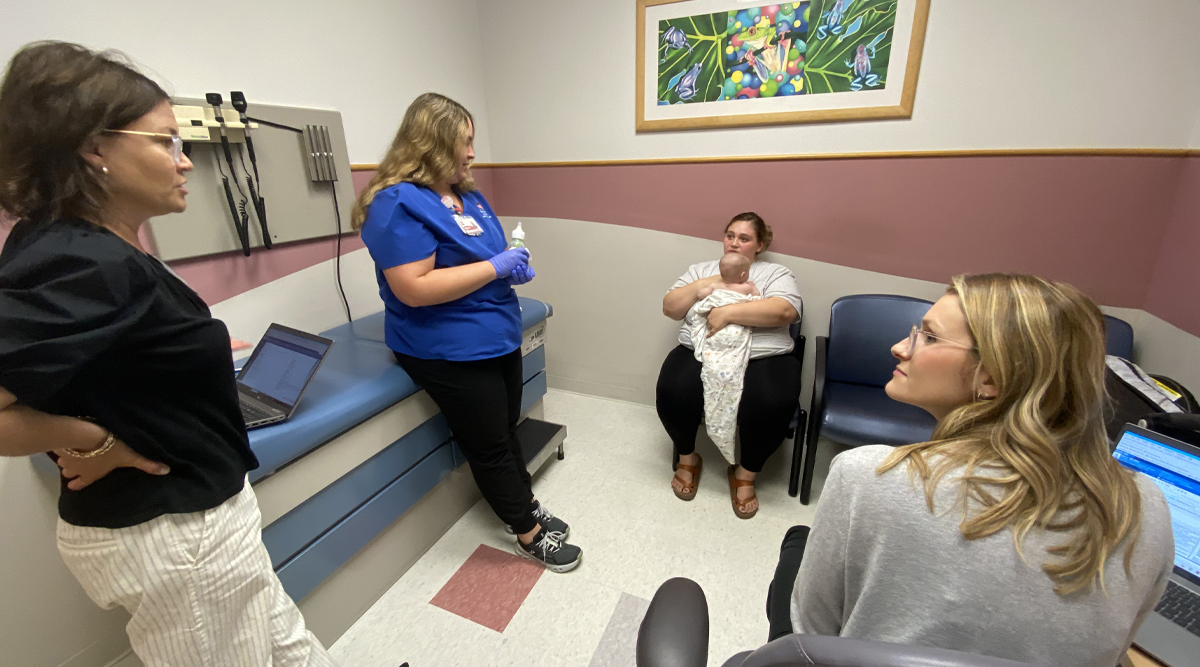
This same team sees Ellie every six to eight weeks to ensure she is progressing on schedule and to answer any questions Alexandria has.
“Mom is really good at following Ellie’s cues,” Dr. Edwards said, and each practitioner agreed, noting that Alexandria does a great job of following the guidance of the team and raising concerns during clinic or between visits.
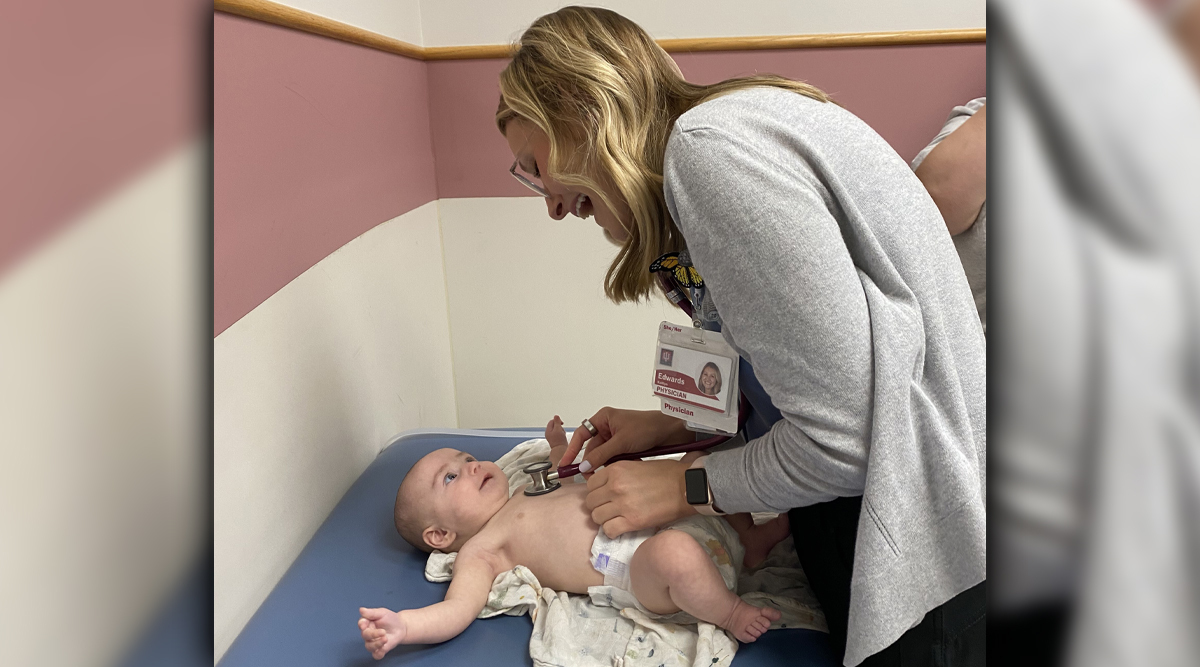
Ellie, who came into this appointment demanding – quite loudly – to be fed, is much more relaxed when they finish, even smiling and tracking everyone in the room with her eyes.
“I love these guys,” Alexandria said as she finished dressing her baby after Dr. Edwards did a quick exam.
“In her first appointment here,” Alexandria recalled, “she had dropped weight, and I was balling my eyes out, but they were so reassuring and so kind. I had no idea what I was doing. I’d never had a baby with a cleft palate. But to be so reassured that you’re doing a good job and you’re a good mom, it helps a lot.”
Ellie, who was also seeing the pulmonology team today, will return for a sleep study later this year, as well as another visit with the feeding team. She is expected to undergo surgery to repair her cleft palate at Riley close to her first birthday.
Related Stories


